
模型与 MCP
待识别

rea
morluto
Reverse engineer anything with agents, from app behavior down to native binaries.
PROJECT TOPICS
INSTALL REFERENCE
dsh plugin --profile web add github:yossi-lee/dsh-chatgpt-plan
该命令指向仓库当前默认分支;尚无绑定当前 commit 的完整验证结果。
PROJECT README
English | 中文
Use your ChatGPT plan to run DSH tasks through OpenAI's official Sign in with ChatGPT flow. This bundle adds the codex-plan provider and account controls in Settings → Models. Each user authorizes their own account; eligible requests consume their existing plan allowance. The plugin uses the public Responses API and keeps DSH's agent loop and tools. It is an independent integration, not an OpenAI or DeepSeek endorsement.
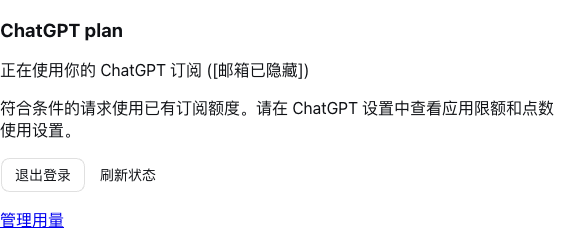
The account controls in Settings → Models (email hidden):
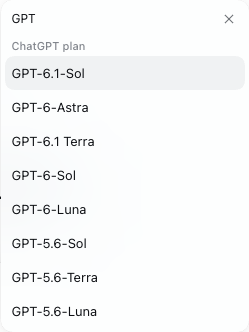
Available models in the model picker. The list depends on your account and may change:
Use Node.js ≥24.9 and DSH 0.2.1-rc.5, 0.2.2-alpha.2, or 0.2.2-rc.1. This version targets profiles based on dsh-base, including Web, Desktop and headless; other DSH versions are rejected by its compatibility declaration. You need a ChatGPT account eligible for SIWC plan usage, with plan usage granted during authorization. Browser sign-in and model discovery have been verified with a real account. Real-account inference remains unverified.
Download the prebuilt package from GitHub Releases and install it without a build step:
curl -fL https://github.com/yossi-lee/dsh-chatgpt-plan/releases/download/v0.1.4/dsh-chatgpt-plan-0.1.4.tgz -o dsh-chatgpt-plan-0.1.4.tgz
dsh plugin --profile web add ./dsh-chatgpt-plan-0.1.4.tgz
dsh web --no-open
Restart an already running DSH after installation. GitHub source archives do not contain built code; use the release .tgz for installation.
In Desktop, install the local .tgz or its release download URL through the plugin manager, then restart Desktop. Use 0.1.4 for DSH 0.2.2-rc.1. Version 0.1.3 supports the two older versions above; 0.1.2 supports only DSH 0.2.2-alpha.2. Do not disable compatibility checks.
From this checkout, install the built plugin into a CLI-managed profile:
npm ci --ignore-scripts --legacy-peer-deps
npm run build
dsh plugin --profile web add /absolute/path/to/dsh-chatgpt-plan
dsh --profile web --dump-config
dsh web --no-open
The composed configuration contains the dsh-chatgpt-plan bundle and codex-plan row. Restart an already running DSH after installation. The bundle enables the existing credentials and authorization rows, including when a headless profile disabled them. Their storage is the DSH credential store, shared by profiles using that store. Desktop owns its own profile; install the tarball through its plugin manager rather than using the CLI's Web profile.
For distribution without a source checkout, build and pack the plugin:
npm pack
dsh plugin --profile web add /absolute/path/to/dsh-chatgpt-plan-0.1.4.tgz
This package is not published to npm. The tarball contains built Host and browser code and requires no installation-time build. Removing the plugin with dsh plugin --profile web remove dsh-chatgpt-plan removes its bundle layer; credential records remain in the DSH store.
Open Settings → Models → ChatGPT plan and choose Continue with ChatGPT. Open the authorization link, sign in on OpenAI's page, and allow plan usage. When the browser cannot reach the DSH Host's loopback listener, paste the complete callback URL into the account card. The card reports success only after token verification and credential storage. Then select a model under ChatGPT plan in DSH's model selector.
Use Cancel sign-in to withdraw a pending attempt. Sign out stops this instance's account requests, attempts remote revocation and clears local tokens; it retains the host ID and account/client registration for later sign-in. If remote revocation cannot be confirmed, the card reports it and directs you to disconnect the application in ChatGPT settings. Manage usage opens ChatGPT's app limits and credit settings.
Override the codex-plan row in your profile's cordis.patch.yml. DSH applies defaults from the plugin schema for omitted fields. Changes require remounting the plugin or restarting DSH.
| Field | Default | Behavior |
|---|---|---|
loginTimeoutMs |
180000 |
Total browser authorization deadline. |
requestTimeoutMs |
180000 |
Catalog, inference and revocation operation deadline. |
authRequestTimeoutMs |
15000 |
Token/revocation network budget, capped at 20000 to leave room within the store's writer-lock wait. |
refreshMarginMs |
180000 |
Refresh before expiry, respecting an issued earliest-refresh time. |
revocationRetries |
1 |
Additional revocation attempts after a network error or server failure. |
revocationRetryDelayMs |
250 |
Initial exponential-backoff delay for revocation. |
callbackPort |
1455 |
Loopback listener port; 0 selects an available port. |
modelContextWindows |
{} |
Explicit per-model context limits when needed; otherwise use catalog metadata. |
Endpoints, OAuth scopes and the provider ID follow this plugin's fixed protocol implementation. Tokens never belong in configuration. If a credentials document is corrupt, the plugin refuses to overwrite it; repair or remove its codex-plan/connection record before signing in again.
The bundle patch enables the existing credential services and inserts one plugin row. Authentication persists one host ID and one account registration in the DSH store, verifies ID tokens with JWKS, and rotates credentials under the store's cross-process lock. A lost refresh response invalidates the local token set because its refresh token may already have rotated.
The adapter binds a request to its login generation and calls api.openai.com/v1/models and /responses. The message conversion uses namespaced tools and validates account/model-scoped replay metadata. The stream translator emits DSH blocks and accepts success only after a completed response. Account controls call credential-free Remote methods; tokens stay on the Host. The plugin never imports Codex's login files or launches Codex CLI.
For development against a sibling DSH checkout, install dependencies, link the actual harness packages, then check and build:
npm ci --ignore-scripts --legacy-peer-deps
npm run link:dsh -- ../dsh
npm run typecheck
npm test
npm run verify:dsh -- ../dsh
The link script changes only this project's node_modules. Type checks use DSH's real declarations, not local replacement declarations. The verification script installs the plugin into disposable profiles using pnpm dsh, runs an offline headless task through a real tool round trip, resumes it after a process restart, and compares the request snapshot. It does not use an API key or your existing Codex authentication. Browser sign-in/cancellation was checked separately against an isolated Web profile.
The model receives DSH's retained text history and tools grouped under the dsh namespace, described as Tools executed by DeepSeek Harness. Tool results correlate by call ID. Validated native reasoning and response items are replayed only for the same model and login generation, with unchanged visible content. The adapter adds no persona or task instructions.
Each HTTP request supplies the required history with store: false and stream: true. Token use counts against the authorized account's eligible plan allowance. Unsupported controls fail explicitly, and neither the SDK nor the adapter automatically retries inference or switches to API-key billing.
Unchanged history retains its native item order, phase and encrypted reasoning. Editing or pruning content, changing models, or reauthorizing invalidates affected native replay. Provider cache availability remains outside this plugin's control.
0.This preview is not published to npm. Browser authorization and model discovery have been verified with an eligible account; real-account multi-step tasks, token rotation and revocation still need verification.
The package and display name changed from dsh-codex-plan / Codex plan to dsh-chatgpt-plan / ChatGPT plan in 0.1.2. Remove the old package before installing the new one. Internal provider, configuration, credential, and replay identifiers remain codex-plan to preserve saved sessions and sign-in.
Version 0.1.3 adds DSH 0.2.1-rc.5 support. Development dependencies target that older release; the test suite and built-package install/tool/session-recovery checks pass against it. The installed Desktop runtime also passes browser account-card mount and sign-in start/cancel checks. Catalog invalidation uses credential events shared by both supported releases.
Version 0.1.4 adds DSH 0.2.2-rc.1 compatibility while retaining support for older versions. No runtime code changes are needed. Type checking and all 23 tests pass with both 0.2.1-rc.5 and 0.2.2-rc.1 dependencies. The CLI bundled with the installed 0.2.2-rc.1 Desktop also passes tarball installation, tool execution, and session resume after a process restart. The new Desktop UI and real-account inference remain unverified.
CLASSIFICATION EVIDENCE
系统优先读取 GitHub Topics,再与站内分类词典和词根规则比对。当前命中: openai、deepseek-harness。
morluto
Reverse engineer anything with agents, from app behavior down to native binaries.

deepseek-ai
DeepSeek Harness: Everything is a Plugin.

nexu-io
The 1st Collaborative AI Design Agent Workspace. Local-first and open source. Create motion, prototypes, websites, apps, dashboards, presentations, images, and videos with your team and AI agents. Share work, exchange feedback, and iterate together in one workspace.