

模型与 MCP
待识别

rea
morluto
Reverse engineer anything with agents, from app behavior down to native binaries.
PROJECT TOPICS
INSTALL REFERENCE
dsh plugin --profile web add github:tzzs/dsh-explore
该命令指向仓库当前默认分支;尚无绑定当前 commit 的完整验证结果。
PROJECT README
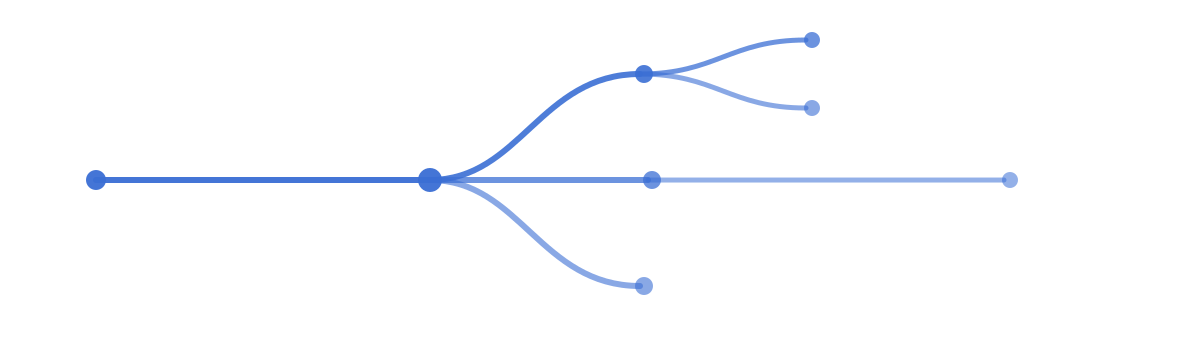
A branching-conversation canvas for DeepSeek Harness.


English | 简体中文
A conversation in DSH is a line: A → B → C. Real thinking does not look like that — on one answer you often want to ask several unrelated things at once, and once asked they all sink into history with no way to put them side by side.
DSH Explore adds an Infinite Exploration tab to every conversation: it lays the turns out on an infinite canvas where any answer can become a fork point. Ask a follow-up on a node and a new branch grows from it, carrying the full context from the root to that node while leaving its siblings untouched.
A branch is not a prompt with history pasted into it. It is a real DSH session created with ctx.sessions.fork({ sessionId, atSeq }), so it inherits the exact event prefix up to that answer; tools, approvals, streaming, cancellation and retries all behave like any other conversation.
+ in the corner of a finished card opens an inline composer; press Enter and the new node appears immediately.Ctrl/Cmd+F focuses the search box, and Enter steps through matches, revealing their ancestor paths.The plugin is published to npm as @tanzz/dsh-explore. Install it through DSH's plugin manager:
plugin_manager) → install_bundle.target to @tanzz/dsh-explore; pin a version with @tanzz/dsh-explore@0.1.0.The package name is an install identifier, not a display name: the display name comes from
locale/— 「DSH 探索」 in Chinese, DSH Explore in English. npm's unscopeddsh-exploreis taken by an unrelated project, so the package lives under the user scope.
To work on the plugin itself, install the clone instead — the profile records it as a link: dependency, and edits hot-swap:
git clone https://github.com/tzzs/dsh-explore.git
# target: the absolute path, e.g. E:\workspaces\dsh-explore
To install a specific release without npm, download the .tgz attached to that GitHub Release and point install_bundle at the unpacked package directory:
mkdir dsh-explore-release
tar -xzf tanzz-dsh-explore-0.1.0.tgz -C dsh-explore-release
# target: <absolute path>/dsh-explore-release/packageFour layers, four jobs, deliberately not collapsed into one name:
| Layer | Name | Where it appears | Why this one |
|---|---|---|---|
| Repository | dsh-explore |
GitHub URL, git clone |
the public address; short, lowercase, no spaces, and it does not change after release |
| Package | @tanzz/dsh-explore |
package.json, npm registry, the profile's dependency |
matches the repo, so an install is easy to trace; npm's unscoped dsh-explore is taken, so it uses the user scope; renaming it means uninstall and reinstall |
| Plugin (display name) | DSH Explore / 「DSH 探索」 | plugin list, settings page | the product name a human reads; the DSH prefix says which host it belongs to |
| View (tab) | Infinite Exploration / 「无限探索」 | the third tab inside a conversation | describes what the view does, not the product; follows the UI language |
The tab is a view name, so it is not folded into the display name — "DSH Infinite Exploration" would collide with the tab and read badly in both languages. Nor is the tab shortened to Explore: that drops the "infinite" part, and the canvas really does extend without bound.
client.js                        client view: event projection, layout, canvas, cards, reader overlay
index.js                         host half, an empty apply() — all the work happens in the client
cordis.patch.yml                 inserts the dsh-explore row into the DSH profile
locale/zh.json                   Chinese display name and description
locale/en.json                   English display name and description
icon.svg                         plugin icon
assets/hero.svg                  README hero: one line branching into several paths
test/render-smoke.cjs            renders the whole view with a fake React and asserts both language tables
test/canvas-visibility.cjs       running/waiting nodes must be laid out and drawn; waiting copy; projection whitelist
test/session-rebind.cjs          re-subscribe on a new eventSource, no pruning on an empty window, cold session open()
test/theme-tokens.cjs            no literal colours, required tokens exist, inverted primary-button foreground
test/motion.cjs                  camera interpolation, gesture interruption, navigation replacement, reduced motion
test/wheel-scroll.cjs            the canvas yields the wheel to inner scroll areas and stops at their ends
test/live-clock.cjs              the running card counts wall clock, and only one timer exists
test/reader-dialog.cjs           the reader is a native modal: no hand-built focus trap, contained scroll
test/markdown-table.cjs          GFM tables: alignment, escaped pipes, scrollable wrapper
test/markdown.cjs                the whole supported Markdown surface, plus what it refuses
test/layout-direction.cjs        horizontal and vertical geometry, unequal heights, collapsed branches
test/host-overlay.cjs            conversation overlay, chrome measurement, reader and fallback
test/locale-parity.cjs           all eight dictionaries: same key set, aligned {placeholders}, no cross-script leakage
test/reasoning.cjs               the reasoning card: live tail, disclosure, no-reasoning, retry, cap, truthful count
test/reasoning-persist.cjs       reasoning stays out of the snapshot and is re-derived after a reload
test/real-log.cjs                end-to-end harness over a real session.v4.jsonl.zstd
docs/design.md                   design doc: data model, trade-offs, known gaps
docs/releasing.md                CI, Release Please and npm publishing
.github/workflows/ CI, Release Please and the manual npm publish workflowThe view is a single client plugin; the full design — data model, trade-offs, known gaps — is in docs/design.md (currently in Chinese).
conversation.view slot: id: 'tree', order: 5, and a label thunk that is re-evaluated on every projection, next to Chat and Trajectory.dsh-explore namespace resolved through the client locale service, so switching language swaps the tab title and the whole view. A profile without the locale plugin falls back to the built-in Chinese/English tables, chosen by document.documentElement.lang.entries (durable events plus the transient assistant/live-chunk) and projects one turn onto one card. Nothing extra is recorded, so continuing the chat in Chat simply grows the tree.ask_user_question and approvals are just "a tool that has not returned yet": no turn/end is emitted while waiting and running stays true. The plugin derives the state from tool/call (ask_user_question, settled by callId in tool/result) and approval/asked → approval/decided, and relabels the card from calling a tool to waiting. user/message only ever carries source.kind: 'user' or 'user-question-reply', and both are projected.reasoning content blocks — live as a reasoning-delta chunk on the transient assistant/live-chunk, settled as { type: 'reasoning', text } inside the durable assistant/message. Both reach the plugin unchanged, so one projection covers "thinking now" and "done thinking": while a branch runs the card shows the newest line as a tail, and once it settles the thinking moves into a collapsible section (whose collapsed state still names the last paragraph and admits when the text was capped). A model that does not think renders nothing. A retry reuses the same turn/step, so the failed attempt's thinking is dropped first. Each card keeps at most 12000 characters, and the dropped count is derived from the bytes each block delivered (received − kept) rather than accumulated, because a block is trimmed more than once. Reasoning is not persisted to localStorage: it is re-derived from the log, and that snapshot also holds the parent links, which cannot be rebuilt.Session instance is discarded together with its event window. On the way back, materializeScope mints a new eventSource and the window starts empty. Subscriptions therefore follow eventSource (the old one unsubscribes), an empty window is never treated as "the session is empty" and pruned, and a cold session is open()ed once — otherwise returning straight to the tab gives a blank canvas while Chat-then-tab works. test/session-rebind.cjs pins this.ctx.sessions.fork({ sessionId, atSeq }) gives the child the prefix context up to that answer. Each branch also lands in the session list, so it is renamed ⟂ parent question · new question to stay recognisable.parentSession, so the plugin keeps the tree in localStorage, alongside fold state, tombstones and the layout preference. Card heights are measured at runtime.--dsw-alias-* variables, so light and dark follow the host and no literal value is written. --dsw-alias-brand-primary inverts between themes, so primary-button text must use the matching --dsw-alias-label-primary-foreground rather than #fff; inline code is tinted with 7% label-primary because the official inline-code token is nearly white in light mode. Fonts read the composed --dsw-font-family / --ds-font-family-code tokens, which already join the user's font with the built-in fallback stack. test/theme-tokens.cjs guards all of it.npm test # all sixteen commands below (scripts.test in package.json)
node --check client.js # syntax
node test/render-smoke.cjs # render the whole view with a fake React; assert both language tables
node test/canvas-visibility.cjs # running/waiting nodes must be laid out and drawn; waiting copy; projection whitelist
node test/session-rebind.cjs # re-subscribe after a scope rebuild; no pruning on an empty window; cold session open()
node test/theme-tokens.cjs # no literal colours, tokens exist, primary buttons use the inverted foreground
node test/motion.cjs # camera moves, gesture interruption, navigation replacement, reduced motion, cleanup
node test/wheel-scroll.cjs # the wheel belongs to the reasoning box, not the canvas zoom
node test/live-clock.cjs # the elapsed time advances between events, from one timer
node test/reader-dialog.cjs # the reader is a native <dialog>: showModal, close mirroring, backdrop scroll containment
node test/markdown-table.cjs # GFM tables in answers
node test/markdown.cjs # every Markdown construct the renderer supports
node test/layout-direction.cjs # geometry in both directions, unequal heights, collapsed branches
node test/host-overlay.cjs # host overlay, chrome measurement, reader, fallback
node test/locale-parity.cjs # all eight dictionaries agree on keys, placeholders and script
node test/reasoning.cjs # reasoning: live tail, disclosure, no-reasoning, retry, cap, truthful count
node test/reasoning-persist.cjs # reasoning stays out of the snapshot; re-derived after reload; parent links survivenode test/real-log.cjs <a session.v4.jsonl.zstd> replays a real session end to end; it is optional and not part of npm test.
client.js is a client plugin — the lazy factory behind window.__ModuleLoader__.load — and edits hot-swap into the running host without a page reload. Note that the stylesheet rewrites the same <style> node on every apply(): skipping the rewrite when the node already exists means new rules never take effect after a hot reload.
A PR to main runs .github/workflows/ci.yml on Ubuntu and Windows with Node.js 22 and 24: node --check index.js, npm test, npm pack --dry-run. There is no install step — the plugin and its tests have no npm dependencies, and there is no lockfile.
Releases are driven by Conventional Commits through Google's Release Please: it opens or updates a release PR that bumps package.json, the manifest and CHANGELOG.md; merging it starts the release job, which runs the full matrix on the released commit, packs tanzz-dsh-explore-<version>.tgz, attaches it to the GitHub Release, publishes the release, lets GitHub create the v<version> tag, and publishes the same commit to npm with provenance. @tanzz/dsh-explore@0.1.0 is the published baseline; later versions publish automatically from that workflow.
See CI and releases (currently in Chinese) for first-time setup — Actions permissions, the optional RELEASE_PLEASE_TOKEN secret, and npm Trusted Publishing.
See CONTRIBUTING.md. Commit messages and PR titles follow Conventional Commits — Release Please derives the next version from them — and bug reports and feature requests have issue templates.
See SECURITY.md for how to report a vulnerability privately. Please do not open a public issue for one.
MIT © 2026 tzzs
MIT © 2026 tzzs
By participating you agree to the Code of Conduct.
CLASSIFICATION EVIDENCE
系统优先读取 GitHub Topics,再与站内分类词典和词根规则比对。当前命中: deepseek-harness。
morluto
Reverse engineer anything with agents, from app behavior down to native binaries.

deepseek-ai
DeepSeek Harness: Everything is a Plugin.

nexu-io
The 1st Collaborative AI Design Agent Workspace. Local-first and open source. Create motion, prototypes, websites, apps, dashboards, presentations, images, and videos with your team and AI agents. Share work, exchange feedback, and iterate together in one workspace.