dsh-vision-subagent

Eyes for text-only DeepSeek Harness agents: delegate image reading to a one-shot subagent running on a separately configured vision route (MiniMax / Kimi / any OpenAI-compatible provider). Image bytes and the vision model's intermediate context never enter the main session — only the final text answer comes back.
Why a subagent
- Context isolation: large screenshots and multi-image comparisons never occupy the main model's window
- Multi-turn visual reasoning: the child can call read_image on more workspace files before answering
- Cost & route separation: vision calls bill on the MiniMax/Kimi route; the main model only reasons
Quick start
sh dsh plugin --profile web add /path/to/dsh-vision-subagent
Then edit ~/.dsh/profiles/web/cordis.patch.yml:
`yaml
- insert:
- id: vision-subagent
name: 'dsh-vision-subagent'
config:
provider: kimi-coding # or minimax-cn / a hand-declared route
model: k3 # or MiniMax-M3 / MiniMax-VL-01
`
Restart dsh web, open a new session, and ask: "Look at ~/Desktop/error.png — what is the error?" The model calls vision_agent(images=[...], question=...) on its own.
Screenshots
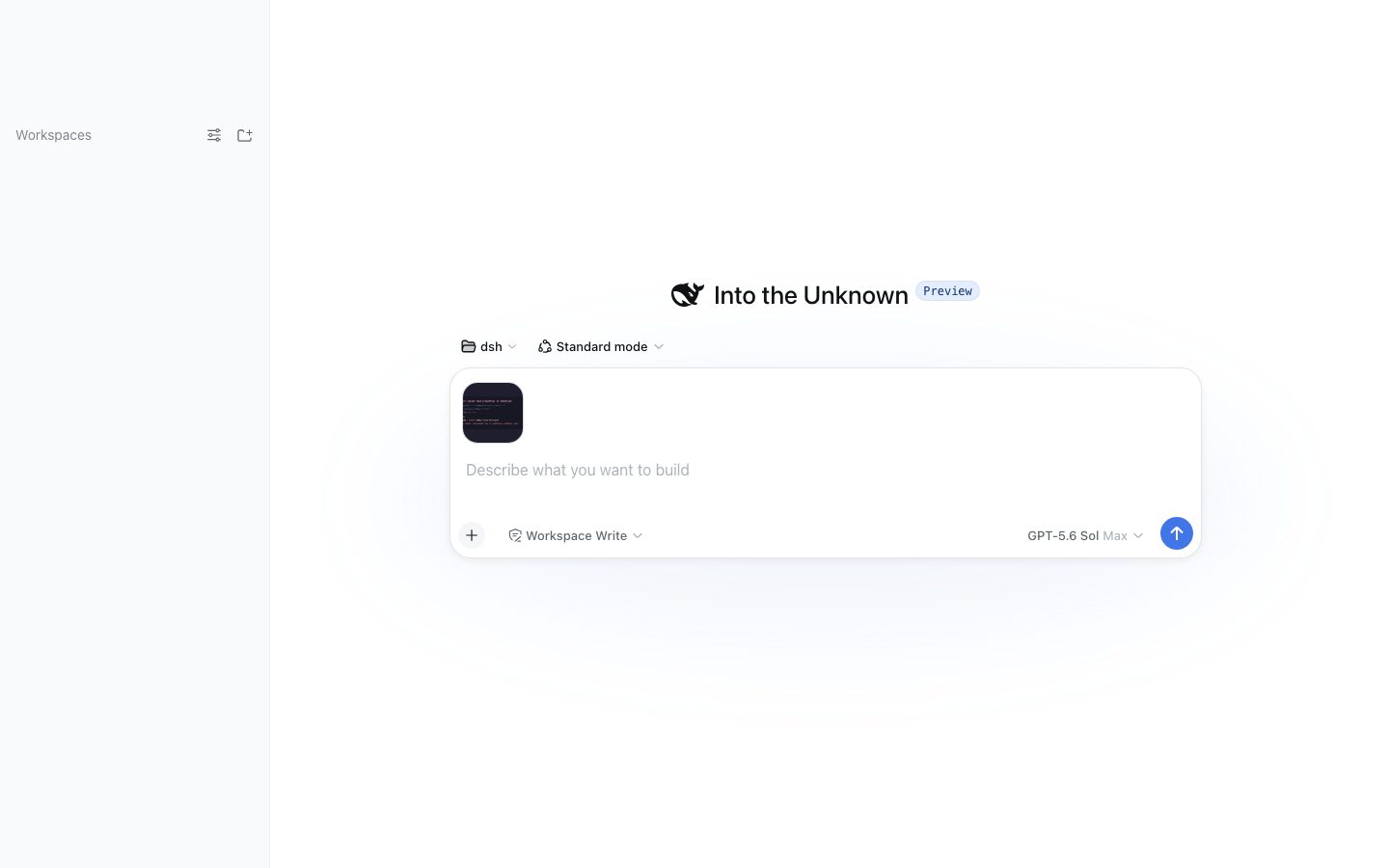
| Paste & ask |
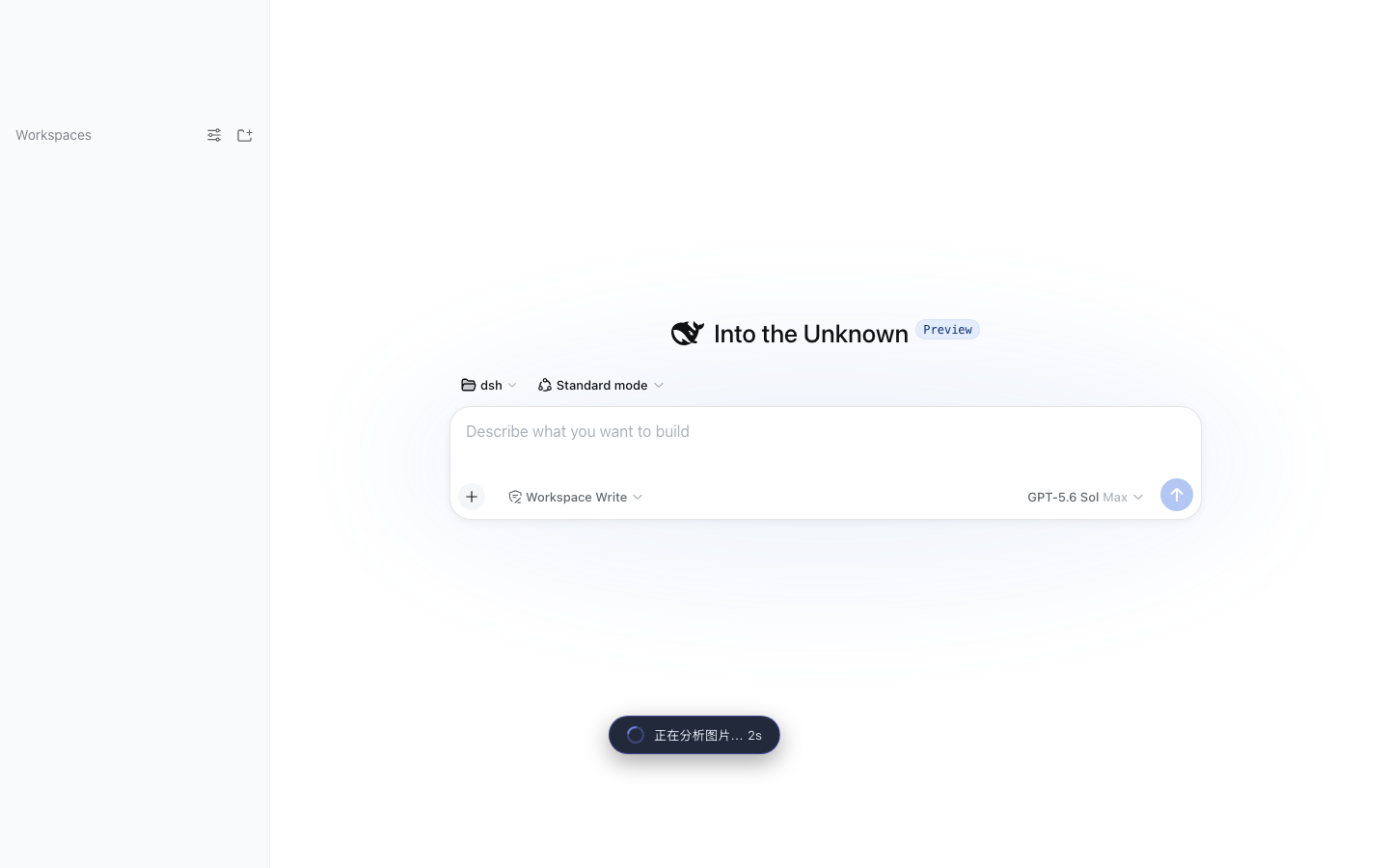
Analyzing |
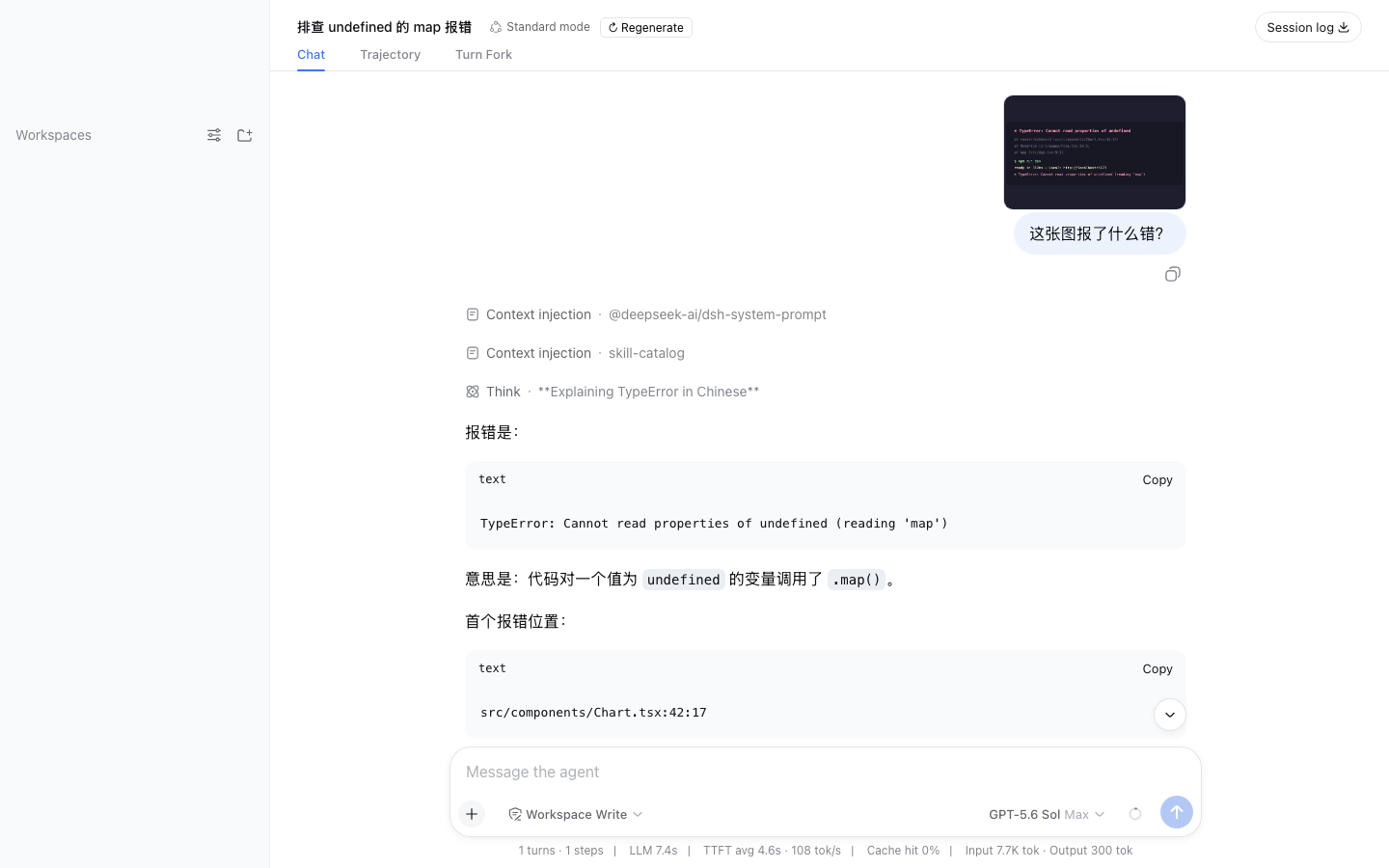
Clean bubble |
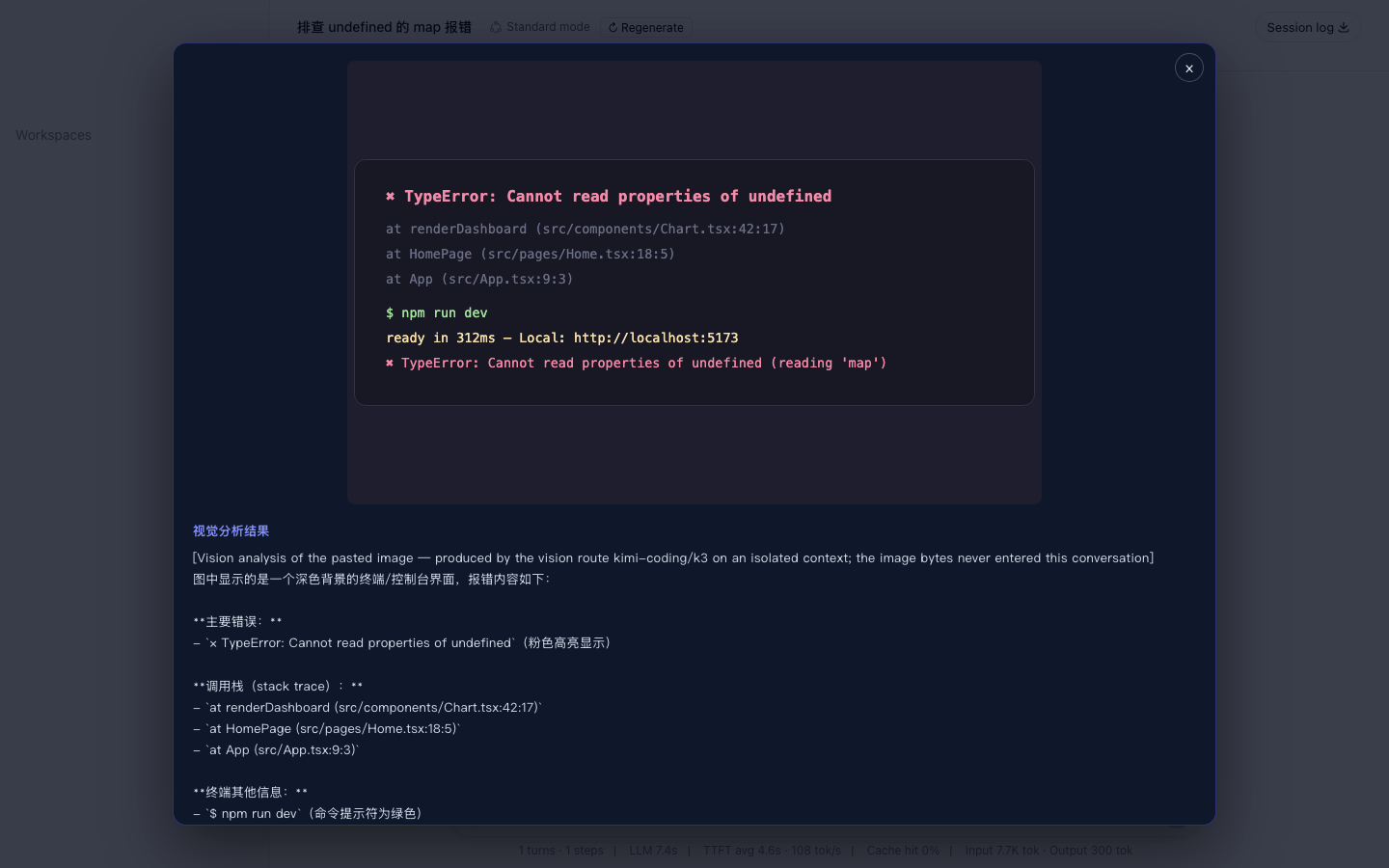
Lightbox |
 |
 |
 |
 |
Paste images into the composer (Codex-style)
The Web composer accepts pasted/dropped images natively. On send, the client plugin uploads them to the host endpoint, which:
- validates the session and stores the images as durable attachments (bounded by deployment limits)
- runs ONE vision-route analysis on an isolated context (image bytes never enter the main session), guided by your draft message — the analysis focuses on what your words target (error text for a debugging ask, outfit details for a styling ask) instead of describing everything generically
- sends only the analysis text along with your message — the main model answers immediately, no tool call needed
In the chat history your bubble shows only your own words plus thumbnails; the analysis lives in the lightbox that opens when you click a thumbnail, never duplicated inline. Need the original bytes later (image editing, pixel-level inspection)? The durable message links let the model call vision_image_fetch to materialize the full-fidelity file into the workspace's .dsh-vision/ directory.
On failure (timeout, route error) the message is not sent and the composer draft is preserved. This channel complements the vision_agent tool: pasted images take the automatic path, while workspace files are read by the model calling the tool itself.
MiniMax / Kimi vision models
| Provider |
baseURL |
Vision models |
Key env |
| Kimi (Moonshot) |
https://api.moonshot.cn/v1 |
k3 / kimi-k3 / moonshot-v1-8k-vision-preview |
MOONSHOT_API_KEY |
| MiniMax |
https://api.minimaxi.com/v1 |
MiniMax-VL-01 |
MINIMAX_API_KEY |
| MiniMax CN |
(built-in llm-pi-ai minimax-cn route) |
MiniMax-M3 |
MINIMAX_CN_API_KEY |
If a route already exists in Settings/Models (e.g. kimi-coding, minimax-cn), the plugin config only names provider + model — the key stays in the route's credential reference. The plugin itself never touches secrets.
Configuration
| Field |
Default |
Meaning |
| enabled |
true |
Master switch |
| provider / model |
'' (dormant) |
Vision route; must be set together |
| subagentProvider |
spawn |
ctx.subagents provider |
| maxDepth |
1 |
Absolute delegation-depth cap for the spawned child; 1 lets the vision child run but forbids further delegation (0 would reject the child itself — a top-level agent's child is depth 1) |
| maxImages |
4 |
Images per call |
| maxImageBytes |
10 MiB |
Per-image byte cap |
| maxPromptChars |
8000 |
Question length cap |
| maxOutputChars |
32000 |
Returned text truncation |
| allowRemoteUrls |
false |
Reserved (v0.1 supports local paths only) |
| allowOutsideWorkspace |
false |
Workspace containment bypass |
| extraAllowedRoots |
[] |
Extra allowed image roots |
| guidance |
'' |
Extra instructions appended to the child prompt |
Security model
- Keys live only in the vision route's credential reference (env); the plugin accepts no plaintext secrets
- Local images default to the session workspace; symlinks are rejected; reads are byte-capped
- The child runs with maxDepth: 1 (runs, but cannot delegate further) and instructions forbid file modification and shell use
vision_image_fetch writes only under the session workspace's .dsh-vision/ with self-generated content-hashed filenames; no caller-controlled path segment reaches the disk
Architecture
Main model (text-only) └─ vision_agent(images, question) ──┐ │ 1. admission: ext / containment / symlink / byte cap │ 2. ctx.attachments.saveImage → durable content-addressed refs │ 3. ctx.subagents.start('spawn', { agentOptions: {provider, model} }) ▼ One-shot subagent (MiniMax/Kimi vision route, own context) └─ final text ──► main session (only this message enters main context)
The plugin consumes harness services structurally (duck-typed) and is rc-version tolerant. Runtime dependencies: @deepseek-ai/dsh-tools (defineTool) and @deepseek-ai/schemastery (config schema) only.
Roadmap
- [x] Web paste bridge: composer images auto-trigger vision analysis (v0.2)
- [x] Context-aware paste analysis: your draft message steers the vision focus; bubble stays clean (v0.3)
- [x]
vision_image_fetch: materialize pasted originals into .dsh-vision/ for editing (v0.3)
- [ ] Settings panel for provider/model selection
- [ ] Remote image URL support (bounded fetch)
- [ ] Embedded SKILL.md steering when to delegate
Development
sh npm install && npm run typecheck && npm test && npm run build
Before publishing, align @deepseek-ai/* versions in dependencies/devDependencies with the target harness rc (runtime deps currently rc.6, peer range >=rc.5 <0.1.0 — compatible with a local rc.5 checkout).
License
MIT


