
模型与 MCP
待识别

rea
morluto
Reverse engineer anything with agents, from app behavior down to native binaries.
PROJECT TOPICS
INSTALL REFERENCE
dsh plugin --profile web add github:idoall/dsh-session-colors
该命令指向仓库当前默认分支;尚无绑定当前 commit 的完整验证结果。
PROJECT README
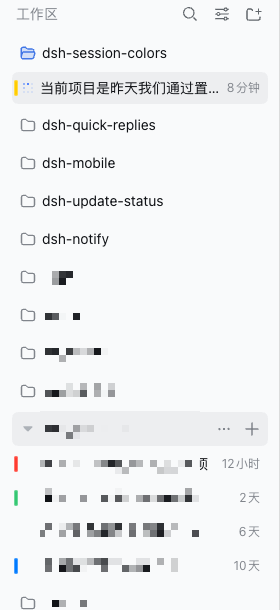
Give any Session a colour and spot it at a glance in the sidebar.


English | 中文
Features · Install · Usage · Compatibility · Cross-device · Configuration · Troubleshooting · Security · Limitations · Uninstall · Development
✅ Supports DSH
0.2.2-rc.4— the newest release candidate (npmnext). Compatibility checked against the installed runtime, as well as the previously verified0.2.2-rc.3,0.2.2-rc.1,0.2.2-alpha.3,0.2.2-alpha.2,0.2.1-rc.4,0.2.1-rc.3,0.2.1-rc.2,0.2.1-alpha.5,0.2.1-alpha.4,0.2.1-alpha.3,0.2.0-rc.2,0.2.0-rc.1,0.1.7-rc.2,0.1.7-rc.1and0.1.7-alpha.2; see Compatibility.
DSH Session Colors is a DeepSeek Harness community plugin. It does not modify DSH core and does not rewrite any Session or Workspace data: a mark is only "Session id → one colour".
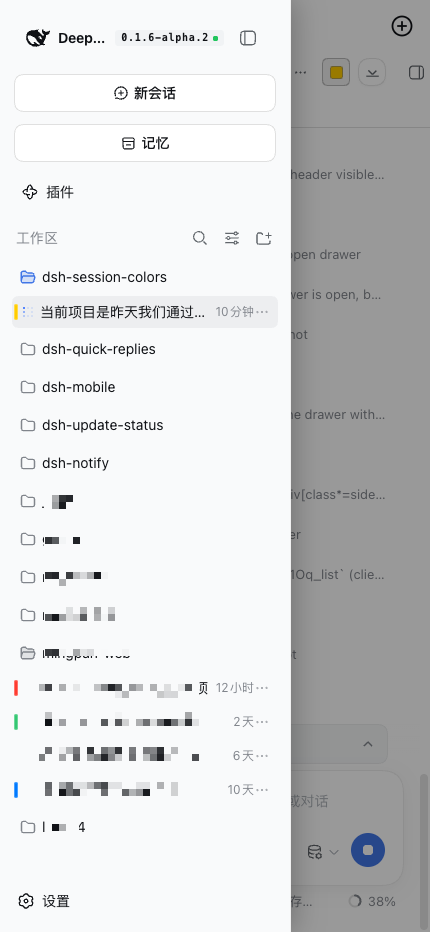
Work is spread across several workspaces, and the workspace list is a wall of look-alike titles. Once a task finishes, the Session you were just in is hard to find again — the status dot is idle and the title is one of twenty. A colour you chose yourself is the cheapest way to make one row recognisable.
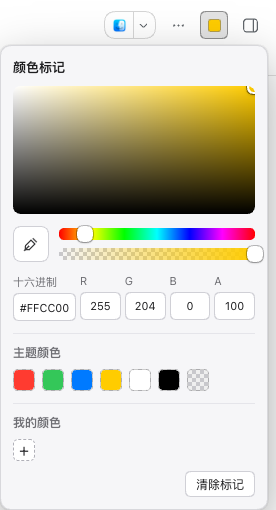
EyeDropper. It sits in the
Session header's utilities, not next to the title.
Requirements:
0.2.2-rc.4 (the newest release candidate),
0.2.2-rc.3, 0.2.2-rc.1, 0.2.2-alpha.3, 0.2.2-alpha.2, 0.2.1-rc.4, 0.2.1-rc.3, 0.2.1-rc.2, 0.2.1-alpha.5, 0.2.1-alpha.4, 0.2.1-alpha.3, 0.2.0-rc.2, 0.2.0-rc.1,
0.1.7-rc.2, 0.1.7-rc.1 and 0.1.7-alpha.2 — plugin 0.1.18
(see Compatibility)dsh plugin --profile <profile> add @idoall/dsh-session-colors@latestThe compatibility table lists the exact versions, if you need to pin one to a specific DSH release.
Working on the plugin itself? Install the directory instead:
dsh plugin --profile <profile> add link:/path/to/dsh-session-colorsThen give it a data directory in the profile's cordis.patch.yml — the same
shape other plugins that need durability use, because the plugin never guesses
the profile path:
- id: dsh-session-colors
  config:
    dataDir: /absolute/path/to/profiles/<profile>/data/dsh-session-colors
Finally restart dsh web (the Host half loads only at boot), then refresh the
Web GUI. It also works without dataDir, but then marks live only for the life of
the Host process.
Opening the picker on a marked Session starts from its current colour. Colours are stored as HSVA, so alpha round-trips exactly.
Current release: plugin 0.1.18 is compatibility-checked against DeepSeek Harness
0.2.2-rc.4 — the newest release candidate (npm next) — and retains
previous verification for 0.2.2-rc.3, 0.2.2-rc.1, 0.2.2-alpha.3, 0.2.2-alpha.2, 0.2.1-rc.4, 0.2.1-rc.3, 0.2.1-rc.2, 0.2.1-alpha.5, 0.2.1-alpha.4, 0.2.1-alpha.3, 0.2.0-rc.2,
0.2.0-rc.1, 0.1.7-rc.2, 0.1.7-rc.1 and 0.1.7-alpha.2.
| Plugin version | Verified DeepSeek Harness | npm status | What it is |
|---|---|---|---|
0.1.18 |
0.2.2-rc.4 (RC), 0.2.2-rc.3, 0.2.2-rc.1, 0.2.2-alpha.3, 0.2.2-alpha.2, 0.2.1-rc.4, 0.2.1-rc.3, 0.2.1-rc.2, 0.2.1-alpha.5, 0.2.1-alpha.4, 0.2.1-alpha.3, 0.2.0-rc.2, 0.2.0-rc.1, 0.1.7-rc.2, 0.1.7-rc.1, 0.1.7-alpha.2 |
latest |
Records DSH 0.2.2-rc.4 compatibility. Executable code and load range unchanged; no migration from 0.1.17. |
0.1.17 |
0.2.2-rc.3 (RC), 0.2.2-rc.1, 0.2.2-alpha.3, 0.2.2-alpha.2, 0.2.1-rc.4, 0.2.1-rc.3, 0.2.1-rc.2, 0.2.1-alpha.5, 0.2.1-alpha.4, 0.2.1-alpha.3, 0.2.0-rc.2, 0.2.0-rc.1, 0.1.7-rc.2, 0.1.7-rc.1, 0.1.7-alpha.2 |
published | Declares the picker panel's own macOS Desktop window region (data-window-drag-exclude), which DSH 0.2.2-rc.1 made necessary for a custom overlay inside a drag row. Host, storage format and load range unchanged; no migration from 0.1.16. |
0.1.16 |
0.2.2-rc.1 (RC), 0.2.2-alpha.3, 0.2.2-alpha.2, 0.2.1-rc.4, 0.2.1-rc.3, 0.2.1-rc.2, 0.2.1-alpha.5, 0.2.1-alpha.4, 0.2.1-alpha.3, 0.2.0-rc.2, 0.2.0-rc.1, 0.1.7-rc.2, 0.1.7-rc.1, 0.1.7-alpha.2 |
published | Records DSH 0.2.2-rc.1 compatibility. Executable code and load range unchanged; no migration from 0.1.15. |
0.1.15 |
0.2.2-alpha.3 (alpha), 0.2.2-alpha.2, 0.2.1-rc.4, 0.2.1-rc.3, 0.2.1-rc.2, 0.2.1-alpha.5, 0.2.1-alpha.4, 0.2.1-alpha.3, 0.2.0-rc.2, 0.2.0-rc.1, 0.1.7-rc.2, 0.1.7-rc.1, 0.1.7-alpha.2 |
published | Fixes chip tracking for the alpha.3 native drawer with reduced motion or instant close. Host and load range unchanged; no migration from 0.1.14. |
0.1.14 |
0.2.2-alpha.2 (alpha), 0.2.1-rc.4, 0.2.1-rc.3, 0.2.1-rc.2, 0.2.1-alpha.5, 0.2.1-alpha.4, 0.2.1-alpha.3, 0.2.0-rc.2, 0.2.0-rc.1, 0.1.7-rc.2, 0.1.7-rc.1, 0.1.7-alpha.2 |
published | Records DSH 0.2.2-alpha.2 compatibility and adds the 0.2.2 prerelease tuple to the declared load range. No executable-code change; upgrading from 0.1.13 needs no migration. |
0.1.13 |
0.2.1-rc.4 (RC), 0.2.1-rc.3, 0.2.1-rc.2, 0.2.1-alpha.5, 0.2.1-alpha.4, 0.2.1-alpha.3, 0.2.0-rc.2, 0.2.0-rc.1, 0.1.7-rc.2, 0.1.7-rc.1, 0.1.7-alpha.2 |
published | Records DSH 0.2.1-rc.4 compatibility. No executable-code or load-range change; upgrading from 0.1.12 needs no migration. |
0.1.12 |
0.2.1-rc.3 (RC), 0.2.1-rc.2, 0.2.1-alpha.5, 0.2.1-alpha.4, 0.2.1-alpha.3, 0.2.0-rc.2, 0.2.0-rc.1, 0.1.7-rc.2, 0.1.7-rc.1, 0.1.7-alpha.2 |
published | Records DSH 0.2.1-rc.3 compatibility. No executable-code or load-range change; upgrading from 0.1.11 needs no migration. |
0.1.11 |
0.2.1-rc.2 (RC), 0.2.1-alpha.5, 0.2.1-alpha.4, 0.2.1-alpha.3, 0.2.0-rc.2, 0.2.0-rc.1, 0.1.7-rc.2, 0.1.7-rc.1, 0.1.7-alpha.2 |
published | Verifies the same code on DSH 0.2.1-rc.2, where every package this plugin consumes is byte-identical to 0.2.1-alpha.5. No logic change over 0.1.10; upgrading needs no migration. |
0.1.10 |
0.2.1-alpha.5 (alpha), 0.2.1-alpha.4, 0.2.1-alpha.3, 0.2.0-rc.2, 0.2.0-rc.1, 0.1.7-rc.2, 0.1.7-rc.1, 0.1.7-alpha.2 |
published | Verifies the same code on DSH 0.2.1-alpha.5, where every package this plugin consumes is byte-identical to 0.2.1-alpha.4. No logic change over 0.1.9; upgrading needs no migration. |
0.1.9 |
0.2.1-alpha.4 (alpha), 0.2.1-alpha.3, 0.2.0-rc.2, 0.2.0-rc.1, 0.1.7-rc.2, 0.1.7-rc.1, 0.1.7-alpha.2 |
published | Verifies the same code on DSH 0.2.1-alpha.4 and moves the load range to the field that alpha.4 actually enforces, top-level engines.dsh. No logic change over 0.1.8; upgrading needs no migration. |
0.1.8 |
0.2.1-alpha.3 (alpha), 0.2.0-rc.2, 0.2.0-rc.1, 0.1.7-rc.2, 0.1.7-rc.1, 0.1.7-alpha.2 |
published | Verifies the same code on DSH 0.2.1-alpha.3 and names that tuple in the declared load range. No logic change over 0.1.7; upgrading needs no migration. |
0.1.7 |
0.2.0-rc.2 (RC), 0.2.0-rc.1, 0.1.7-rc.2, 0.1.7-rc.1, 0.1.7-alpha.2 |
published | Verifies the same code on DSH 0.2.0-rc.2 and adds that exact version to the declared load range. No logic change over 0.1.6; upgrading needs no migration. |
0.1.6 |
0.2.0-rc.1 (RC), 0.1.7-rc.2, 0.1.7-rc.1, 0.1.7-alpha.2 |
published | Verifies the same code on DSH 0.2.0-rc.1 and rewrites the declared load range so the plugin survives the 0.2.0 final release. No code change over 0.1.5; upgrading needs no migration. |
0.1.5 |
0.1.7-rc.2 (latest 0.1.7 RC), 0.1.7-rc.1, 0.1.7-alpha.2 |
published | Confirms the same code runs unchanged on the second release candidate and declares it. No code change over 0.1.4; upgrading needs no migration. |
0.1.4 |
0.1.7-rc.1 (RC), 0.1.7-alpha.2 |
published | Confirms the 0.1.7 adaptation runs unchanged on the first release candidate and declares it. No code change over 0.1.3. |
0.1.3 |
0.1.7-alpha.2 |
published | Adapts to DSH 0.1.7: the Session id comes from the row's own data-row-key (fiber fallback kept), chips follow the Web-Animations row gliding 0.1.7 introduced, and the Host dependency is declared the way 0.1.7 resolves a linked plugin. |
0.1.2 |
0.1.6-alpha.2 |
published | Fixes chips staying at their old coordinates for ~20s when a workspace is collapsed or expanded: a second MutationObserver.observe() on the same target had silently replaced the childList watch. |
0.1.1 |
0.1.6-alpha.2 |
published | Documentation only: the packaged README no longer says "not published", and the market screenshots are declared. |
0.1.0 |
0.1.6-alpha.2 |
published | First release: Session colour marks, Host-side storage, visible inside a phone's sidebar drawer |
0.1.18 supports DSH 0.2.2-rc.4, the newest npm next release candidate. This is a compatibility-record release: no executable code changed. rc.4's only upgrade-guide entry is the DeepSeek streamed content refusal code moving from MALFORMED_RESPONSE to CONTENT_REFUSED, which affects code that classifies LLM error finishes or turn/end errors; this plugin handles no LLM errors and references neither code. Every package this plugin consumes is unchanged between rc.3 and rc.4 — dsh-client-ui-layout, dsh-client-ui-conversation, dsh-client-ui-workspace, dsh-client-ui-sidebar, dsh-host-webserver, the dsh-client-connection Host half, dsh-base and dsh-web have byte-identical lib artifacts. The two packages that differ differ only in their embedded build identity: dsh-client-modules/lib/index.js and dsh-client-ui-sidebar/lib/client.js each change one string (rc.3-6b729fe → rc.4-70005a5). The web shell's own dist assets are byte-identical to rc.3, so the macOS window-drag CSS that 0.1.17 adapted to is unchanged.
0.1.17 added the picker panel's macOS Desktop window region (data-window-drag-exclude). DSH 0.2.2-rc.1 narrowed macOS Desktop's automatic no-drag exclusion from “any matching control or ARIA role anywhere” to interactive elements inside a data-window-drag row. The panel is a fixed overlay mounted inside the conversation header, which is such a row, and its saturation/hue/alpha surfaces are plain role="presentation" divs that DSH's control list does not name, so it declares its own visible box. The attribute is unchanged in this release, and the shell CSS that reads it (html[data-platform=darwin] [data-window-drag-exclude]) is byte-identical to 0.2.2-rc.3.
Live inspection of the installed 0.2.2-rc.4 client confirms both surfaces are still active: session-color-mark in conversation.session.header.utilities (order 40) and session-color-chips in shell.overlay (order 100). All 40 unit tests pass. The declared load range already admits rc.4 through >=0.2.2-alpha.2 <0.3.0, so engines.dsh and both DSH peer ranges are unchanged. This release does not claim real GUI, mobile or cross-device visual acceptance: a registration is not visual verification. No temporary server was started and DSH was not restarted.
Registry check on 2026-11-18: DSH next is 0.2.2-rc.4, latest is 0.2.2-rc.1, and alpha is 0.2.2-alpha.3.
0.1.9 moved that range to top-level engines.dsh, the field DSH 0.2.1-alpha.4
made authoritative — it decides alone when present, and the marketplace reads the
same field. That relocation still stands and is unchanged here.
Upgrading from 0.1.17 needs no migration. On an older DSH — including
0.1.6-alpha.2 — keep plugin 0.1.2. Newer DSH releases are not
auto-declared compatible.
dsh.compatibility.dshReleases in
package.json — and a test keeps both READMEs' compatibility
sections word-for-word with it and inside the range both peerDependencies and
engines.dsh declare. A DSH version that is not listed is never claimed as
compatible.peerDependencies declare >=0.1.7-alpha.2 <0.2.0-0 || 0.2.0-rc.1 || 0.2.0-rc.2 || >=0.2.0 <0.3.0 || >=0.2.1-alpha.3 <0.3.0 || >=0.2.2-alpha.2 <0.3.0
for dsh-client-ui-layout and dsh-client-ui-conversation, and top-level
engines.dsh declares the same range as the Host requirement: that is the
range allowed to load, which is not the same as verified. The six
alternatives are deliberate: a prerelease is admitted only when a comparator
names its exact major.minor.patch, so the 0.1.7 line needs its own
comparator, 0.2.0-rc.1 and 0.2.0-rc.2 are each pinned exactly (a 0.2.0-rc.3
nobody tested stays out), the stable 0.2.0 line is admitted so the plugin
survives the final release, and the 0.2.1 and 0.2.2 lines each cover the
verified alphas and RCs of their own tuple.
The lower bound names the alpha on purpose: a range
like >=0.1.6-0 <0.2.0 admits none of the verified versions.0.2.1-alpha.4, the boot precheck gives top-level
engines.dsh priority over peer ranges (which is why 0.1.9 moved the range
there). The declared DSH range accepts 0.2.2-rc.4; no range widening is needed.sidebar.session.row.leading — a 16px cell before the title. The chip
deliberately stays on its own click-through layer: that seat shares its cell
with the status dot and is mounted only while the row is idle (a running,
waiting or archived row renders no occupant), so a chip placed there would
vanish exactly when it is most useful. See
Limitations and the design record.@deepseek-ai/schemastery is a peer, not a plain dependency: DSH 0.1.7
resolves only a linked plugin's peer dependencies from the running
installation, so a link: install of this directory would otherwise fail to
import the Host half.Storage goes through the plugin's own HTTP route
(GET/POST /plugins/dsh-session-colors/marks), persisted to one JSON file in
the profile's data directory. That is deliberate:
DSH's own user-settings service host-backs settings only for loopback pages —
persistence = $host.isLoopback ? "host" : "memory"— so a page opened over a LAN address or a tunnel gets a permanently unavailable
scope: it can neither read nor write. An own route is not subject to that rule,
which is exactly what makes a mark visible on every device. LAN forwarders
(dsh-bridge, dsh-lan-proxy, and friends) rewrite Host/Origin to loopback
and inject the auth cookie, so a request that arrives over the LAN still looks
like loopback to DSH and the route answers normally.
| Field | Type | Meaning |
|---|---|---|
dataDir |
absolute path | Where session-colors.json is written. Without it, marks live in process memory only. |
A mark is one JSON document:
{
  "version": 1,
  "marks": {
    "session-0698599a-…": { "h": 211.3, "s": 1, "v": 1, "a": 1 }
  }
}
Writes are atomic (temporary file, then rename). To drop a mark, use Clear mark in the picker, or remove that line from the file.
The colour still is not visible on my phone. First check which build the device runs:
document.querySelector('.dsh-sc-layer').dataset
// { dshScBuild, dshScStatus, dshScWritable, dshScMarks, dshScError }
If dshScBuild is not host-routes+animated-rows, the device is running a
cached client: refresh the page (the browser half reloads on a refresh, no DSH
restart needed). If dshScStatus is not ready, the store cannot be read — see
the next item.
The header control shows ⚠.
That means the store cannot be reached: dshScError carries the reason and
dshScWritable says whether writes are possible. This happens when the Host route
was never registered (the profile did not load the plugin) or the data directory
is not writable. It is not the same as "this Session has no colour".
A LAN page behaves differently.
Since 0.1.0 this plugin behaves identically on LAN/tunnel pages and loopback
pages, because storage uses its own route. If you see the old "settings
unavailable" behaviour, check which version is installed.
Chips are in the wrong place, or gone.
The layer finds rows by ARIA role and reads the Session id from the row's
data-row-key (falling back to React internals). A large change to DSH's sidebar
structure can make it find nothing; chips then disappear, but clicking is
unaffected because the layer is click-through.
connection.requestRejection), and
writes add a same-origin check on top.Pre-existing limits. Current search-result rows use result.id, which the fiber fallback does not recognise, so chips are not guaranteed there. Host disk-write errors can still fall back to memory without reporting the persistence failure; this patch does not fix these existing issues.
The chip depends on DSH's row DOM. It reads rows by ARIA role and the
Session id from the row's data-row-key, falling back to React internals. A
future DSH release can stop chips from appearing; it cannot break clicking.
The chip is not a row occupant. DSH 0.1.7-rc.2 declares a real
sidebar.session.row.leading seat in the row's status-dot cell, and this plugin
deliberately does not use it: that seat is mounted only while a row is idle,
so a chip placed there would disappear for running, waiting and archived
Sessions. The chip stays on its own click-through layer, which keeps it visible
in every state and never covers the dot.
Marks are per DSH instance. They live in one profile's data directory, so two independent DSH servers do not share them.
No permission model. Anyone who can reach the Host's authenticated routes for this profile can read and write marks.
Colour only. No labels, icons, or emoji.
dsh plugin --profile <profile> remove @idoall/dsh-session-colorsRestart DSH and refresh the Web GUI. session-colors.json in the data directory
is not deleted for you; remove it yourself if you do not want it.
npm test # 39 tests: bundle shape, store, route, cross-device, geometry, docsThe browser half is a hand-authored __ModuleLoader__ bundle, which is the only
format the DSH client loader accepts for a package client half. It is written by
hand on purpose: there is no build step, so nothing can drift from the DSH
version it targets.
src/index.js       Host half: routes, the JSON store, auth fence
src/client.js      Browser half: picker, chip layer, the fetch-backed store
tests/             Unit tests for both halves, plus the doc-consistency checks
docs/              The design record (Chinese) and the README screenshots
demos/             A standalone HTML demo of the picker
Design decisions and measurements live in docs/plugin-design.zh.md (the current part starts at the 「会话颜色标记版」 section).
CLASSIFICATION EVIDENCE
系统优先读取 GitHub Topics,再与站内分类词典和词根规则比对。当前命中: deepseek-harness。
morluto
Reverse engineer anything with agents, from app behavior down to native binaries.

deepseek-ai
DeepSeek Harness: Everything is a Plugin.

nexu-io
The 1st Collaborative AI Design Agent Workspace. Local-first and open source. Create motion, prototypes, websites, apps, dashboards, presentations, images, and videos with your team and AI agents. Share work, exchange feedback, and iterate together in one workspace.