
模型与 MCP
待识别

rea
morluto
Reverse engineer anything with agents, from app behavior down to native binaries.
PROJECT TOPICS
INSTALL REFERENCE
dsh plugin --profile web add github:a805026135/dsh-constellation
该命令指向仓库当前默认分支;尚无绑定当前 commit 的完整验证结果。
PROJECT README
A live, self-organizing constellation map of your DeepSeek Harness plugin universe.
DeepSeek Harness runs on the idea that everything is a plugin — but once your profile carries a hundred fibers, nothing tells you what your agent is actually made of. Which fiber is stuck pending? Who provides llm? What does dsh-session-title-first-prompt-llm even do?
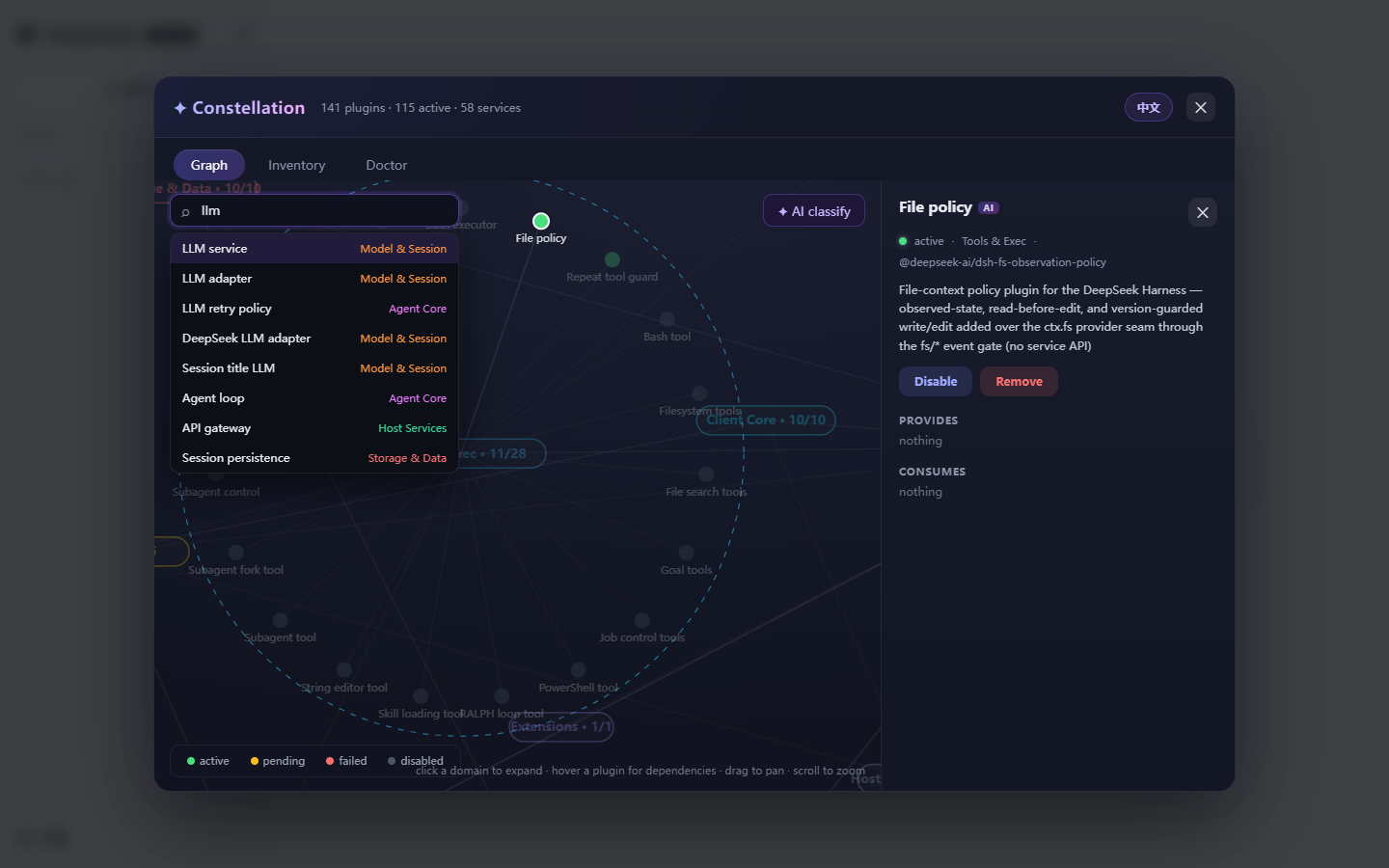
Constellation answers all three: a floating ✦ button in the DSH Web UI opens a real-time map of every plugin and service fiber in your running profile — organized into balanced capability domains, labeled in plain language, searchable, and operable.
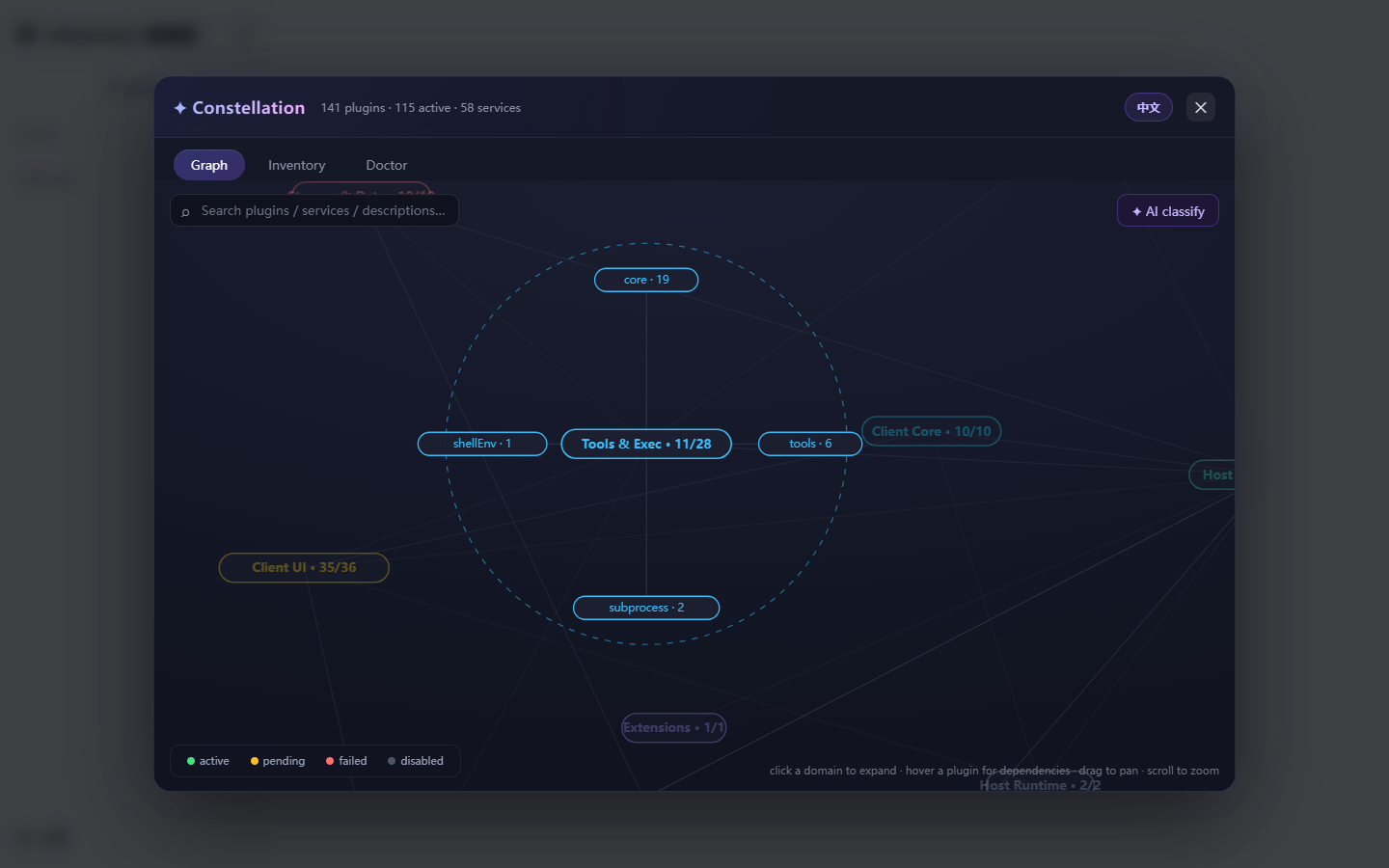
The map starts collapsed: one pill per capability domain, sized by member count, with aggregated dependency edges between domains.
llm ×8) — click a cluster to see just those plugins/ and type a plugin name, service, keyword,
or domain — results ranked, keyboard-navigable, and clicking one flies
the camera to the node with a pulse highlight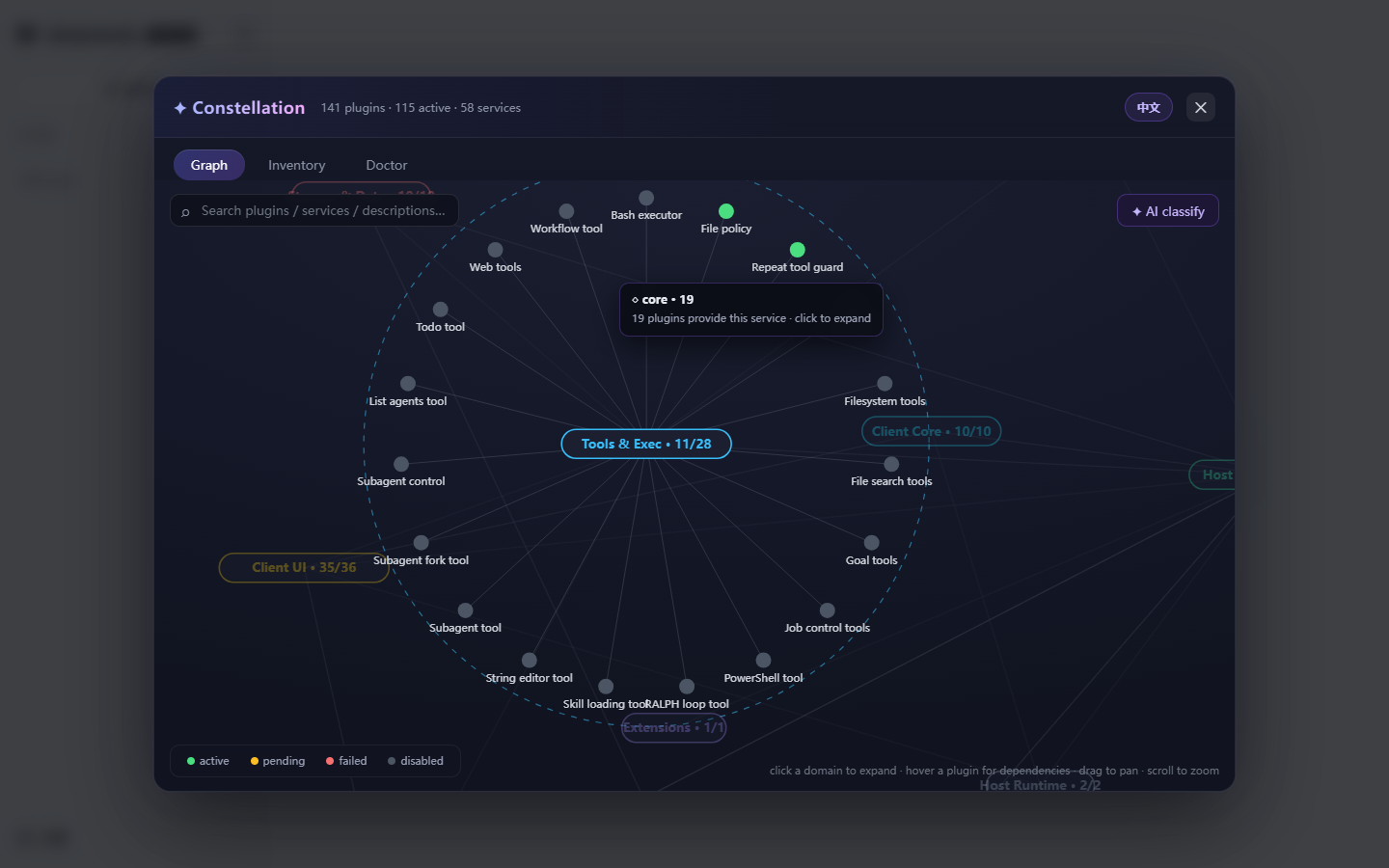
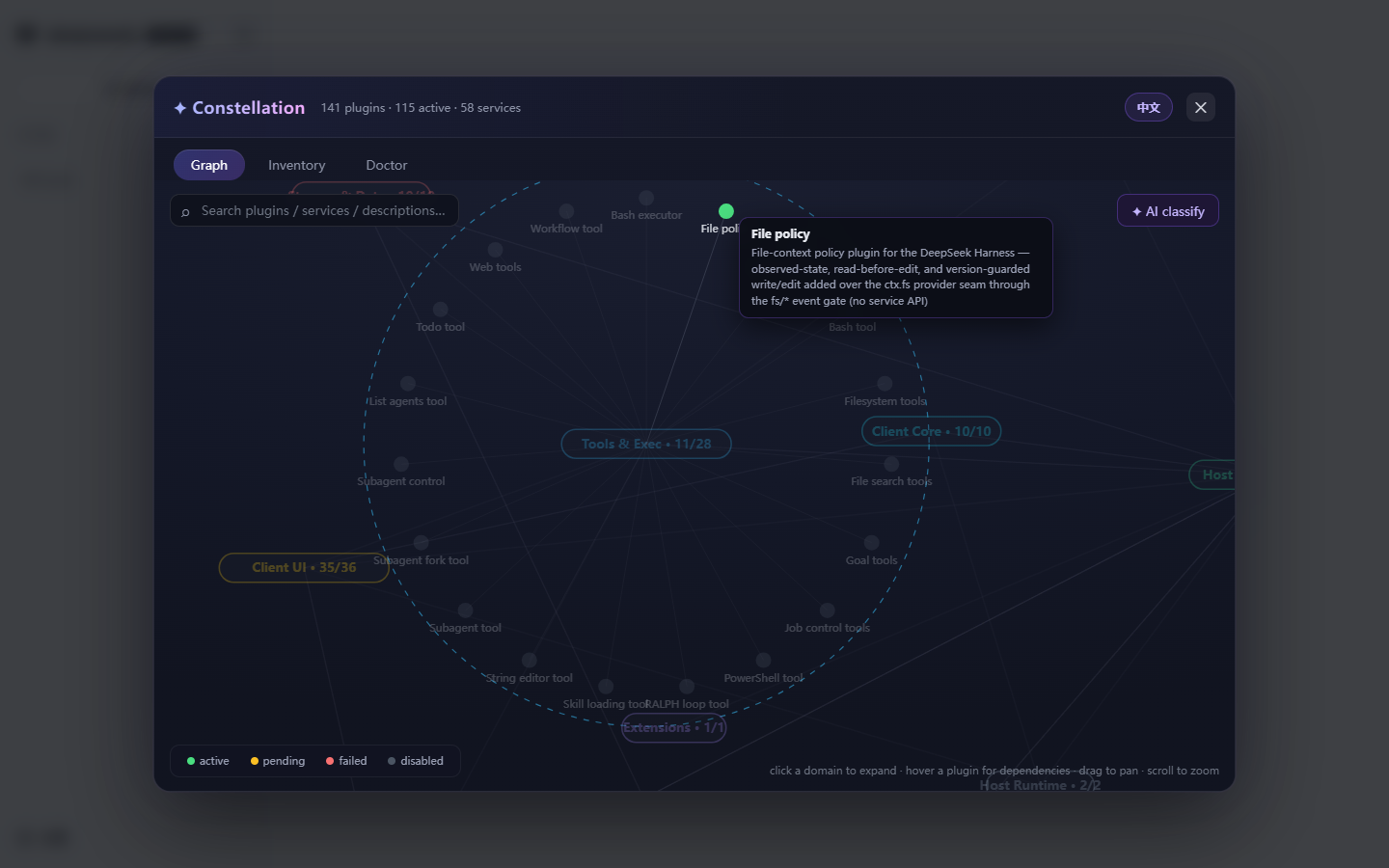
Plugin ecosystems grow faster than any hand-written category list. When your profile has an LLM configured, Constellation puts it to work:
dsh-session-title-first-prompt-llm becomes 标题生成 / Session title LLMEverything is cached under $DSH_HOME/storages/ — one classification pass
survives restarts. Profiles without an LLM simply fall back to the built-in
heuristic classifier; the graph never depends on model access.
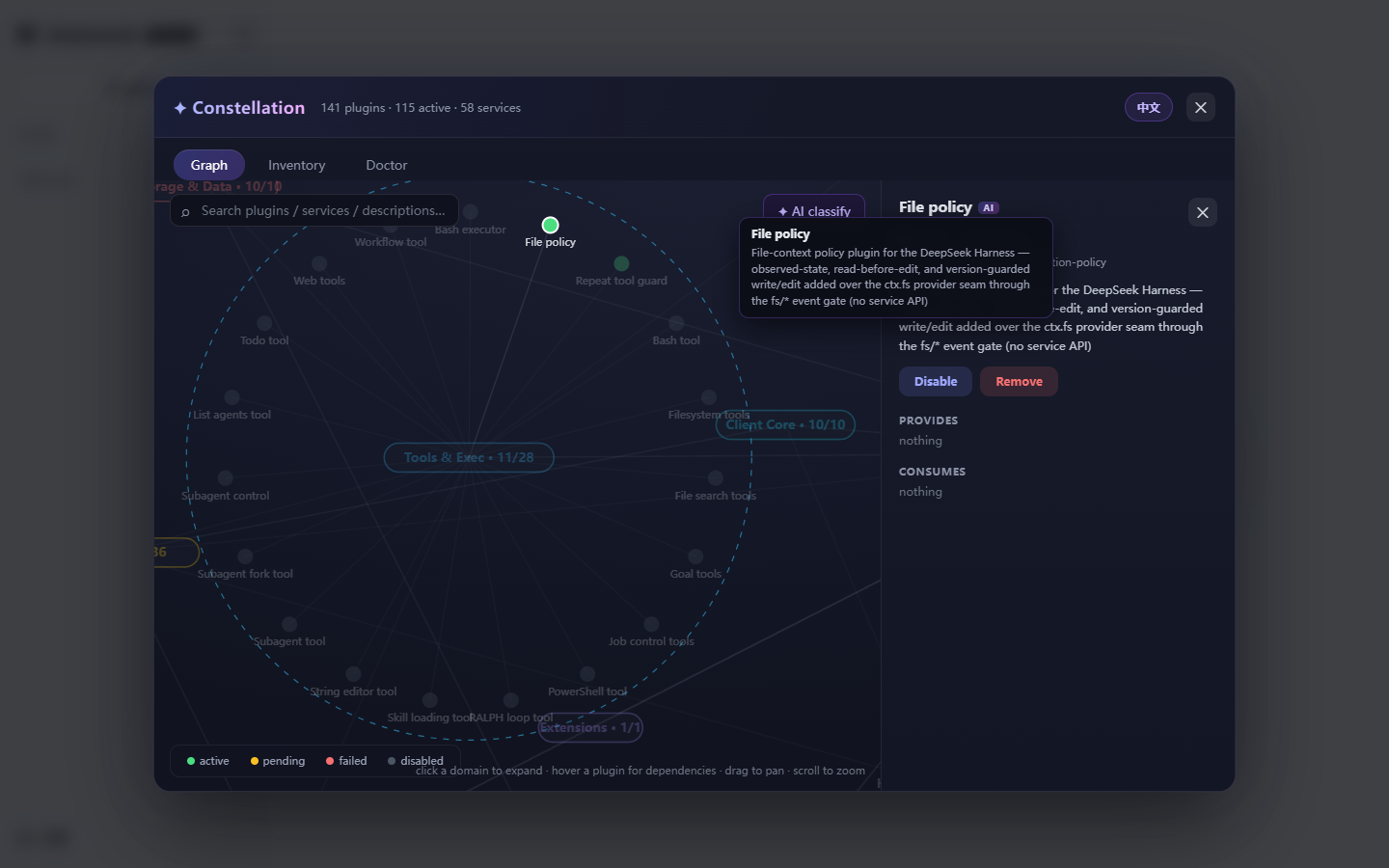
Every plugin opens a side drawer with its label, description, phase, and provided/consumed services, plus live entry operations:
Cards grouped by capability domain: phase, label, description, and services. Click a card for the detail drawer.
Automatic diagnostics over the live snapshot (click a finding to inspect):
The whole interface speaks Chinese and English with a one-click switch — a natural fit for a harness whose plugin names are English but whose users often aren't.
dsh plugin --profile web add dsh-constellationThen start the Web UI (dsh --profile web) and click the ✦ button in the
bottom-right corner.
┌─ Browser ──────────────────────────────────────┐
│  client bundle (React, ~90 KB)                 │
│  body-portal panel · canvas constellation map  │
│  polls GET /constellation/graph                │
└───────────────────┬────────────────────────────┘
                    │ same-origin, loopback-fenced
┌───────────────────┴────────────────────────────┐
│  host half (Node)                              │
│  walks ctx.loader.entries() per request:       │
│    fiber.inject keys  → consumed services      │
│    fiber.store  keys  → provided services      │
│    fiber.state        → phase                  │
│  optional llm sub-fiber: taxonomy + labels     │
└────────────────────────────────────────────────┘
The graph projection reads the same runtime records the cordis context proxy consults — no kernel-internal APIs, so it survives minor version drift. Data never leaves localhost: routes reject non-loopback Host headers, and the LLM calls go through the profile's own configured model.
>= 0.1.0-rc.8 with a Web composition (e.g. the web profile)>= 20npm install
npm run build # tsc (types) + tsdown (lib/index.js + lib/client.js)The client bundle follows the official DSH client-bundle preset: a CJS closure
factory registered through window.__ModuleLoader__, with React / react-dom
kept external against the shell's module table.
MIT
CLASSIFICATION EVIDENCE
系统优先读取 GitHub Topics,再与站内分类词典和词根规则比对。当前命中: deepseek、deepseek-harness。
morluto
Reverse engineer anything with agents, from app behavior down to native binaries.

deepseek-ai
DeepSeek Harness: Everything is a Plugin.

nexu-io
The 1st Collaborative AI Design Agent Workspace. Local-first and open source. Create motion, prototypes, websites, apps, dashboards, presentations, images, and videos with your team and AI agents. Share work, exchange feedback, and iterate together in one workspace.