
模型与 MCP
待识别

rea
morluto
Reverse engineer anything with agents, from app behavior down to native binaries.
PROJECT TOPICS
INSTALL REFERENCE
dsh plugin --profile web add github:YanKaFei/ascii-h3-director
该命令指向仓库当前默认分支;尚无绑定当前 commit 的完整验证结果。
PROJECT README
Costume · Art · ASCII Cinema · ASCII H3 · 2D MV · Virtual Heroine






中文 · English · 한국어 · 日本語 · Français
Force one idea into a chain of characters that will not stop changing shape.
ASCII H3 Director is a directing tool for MiniMax H3. It compiles a free-form brief into a transformation chain, a prompt written for time rather than prose, and a quality gate that stands between you and the pay button. It also ships a deterministic ASCII render engine: a 5×9 hand-authored bitmap font that turns the same FilmSpec into byte-reproducible terminal frames, SVGs, PNGs, and contact sheets. It is both a DeepSeek Harness (DSH) plugin and a portable Agent Skill.
v1 was a Markdown skill plus bash scripts. generate_h3.sh forwarded to mmx video generate, continue_from_last_frame.sh used ffmpeg to pull the last frame of the previous clip, make_contact_sheet.sh tiled frames through an ffmpeg filter, and every directorial rule lived as prose inside SKILL.md. It worked — but the judgement was on the model's honour, and you had to pay before you could see a single frame.
| Capability | v1 | v3 |
|---|---|---|
| Shape | Markdown + bash wrappers | 8 zero-dependency ES modules + DSH plugin + Agent Skill |
| Seeing the frame | Generate first, then extract with ffmpeg | Deterministic preview engine — no API key required |
| Type | None (terminal font) | Hand-authored 5×9 bitmap covering all 95 printable ASCII glyphs |
| Reproducibility | Unspecified | Seeded; two renders of one FilmSpec matched SHA-256 (measured) |
| Motion logic | Prose rules | 21-mechanism grammar library + a FORM_SUCCESSORS legality table |
| Continuation | "preserve the previous motion" | Continuity contract: exit_state → entry_state + checkSeam |
| Quality | 6 self-directed questions | 7 automated checks scored /100; no PASS, no generation |
| Reference analysis | "extract the motion grammar" (manual) | reference subcommand: STYLE DNA and chain inferred from observations |
| Contact sheet | ffmpeg required | Built-in PNG encoder + SVG sheets, no ffmpeg |
| Delivery | Anything that reads SKILL.md | DSH Cordis plugin with host tools and a Director Console panel |
| Docs | English | Chinese / Japanese / English |
Path A — DSH plugin
# from npm
dsh plugin --profile web add @yankafei/ascii-h3-director

# or from a local path (development)
dsh plugin --profile web add /Users/coffee/Desktop/创造一切可能/ascii-h3-director
Once installed, the plugin registers its host tools with the session and mounts the Director Console panel in the Web UI.
Path B — generic Agent Skill
# copy by hand
mkdir -p ~/.agents/skills
cp -R skill ~/.agents/skills/ascii-h3-director

# or run the installer
skill/INSTALL.command
The installer copies skill/ to ~/.agents/skills/ascii-h3-director/ and prints the self-check command. The two paths do not conflict: the plugin serves DSH, the skill serves any coding agent that reads SKILL.md.
Everything below is a real, copy-pasteable transcript. No API key, no cost.
$ ascii-h3 doctor
ascii-h3-director v3.0.0

[ok] node                         v24.19.0
[ok] engine modules               8 ramps, 5 palettes
[ok] glyph atlas                  5×9 bitmap font, printable ASCII
[ok] mechanisms                   21 mechanisms in the grammar
[ok] png encoder                  built-in, no image library required
[ok] render smoke test            N cells in Mms
[ok] quality gate                 score 100/100
[ok] mmx-cli (paid generation)    not installed — optional; install with: npm i -g mmx-cli

all core checks passed

$ ascii-h3 plan "15s ASCII clip about memory collapsing into language"
TITLE      15s / ascii / memory / collapsing
SEED       ascii-h3:1wok55r
DURATION   15s @ 21:9
LOOK       brutalist-digital / brutalist / high-impact
HERO TEXT  —

TRANSFORMATION CHAIN
   1. 0–3s       Density Dissolve  [canonical]
      the form dematerialises because its glyph ramp slides toward emptiness while its silhouette holds
      exit → form=field camera=forward-punch-through v=1
   2. 3–6s       Glyph Sphere  [strong]
      thousands of characters orbit a tiny focal mark, then all orbits converge
      exit → form=solid-form camera=forward-punch-through v=1
   3. 6–9s       Typographic Wall  [strong]
      the camera punches through each wall without cutting; the wall shatters from the point of impact outward
      exit → form=fragments camera=forward-punch-through v=1
   4. 9–12s      Command Shockwave  [canonical]
      the release from compression travels outward as a single readable command, dragging microtype in its wake
      exit → form=space camera=forward-punch-through v=1
   5. 12–15s     ASCII Tunnel  [strong]
      the camera travels forward through the rings while they stretch into long perspective trails
      exit → form=space camera=forward-punch-through v=1

QUALITY GATE  PASS  (100/100)
────────────────────────────────────────────────────────────────
  ✔ One legible transformation chain
      5 beat(s): density-dissolve → glyph-sphere → type-wall → shockwave → tunnel
  ✔ First shot has a clear source state
      opens on "density-dissolve"
  ✔ Every transition has a physical cause
      all links follow the mechanism grammar
  ✔ At least 2 strong scale/density contrasts
      density spans 0.12–0.94 with 9 major swing(s)
  ✔ Final state is usable as the next clip’s input
      ends unresolved: the camera is still inside the tunnel with speed left over
  ✔ Generic HUD / cyberpunk / random glitch excluded
      no rejected vocabulary in the positive prompt
  ✔ Prompt stays compact (written for time, not prose)
      153 words

PROMPT (153 words)
────────────────────────────────────────────────────────────────
15-second ultra-wide ASCII kinetic typography sequence.

0–3s: The form dematerialises because its glyph ramp slides toward emptiness while its silhouette holds.
3–6s: Thousands of characters orbit a tiny focal mark, then all orbits converge.
6–9s: The camera punches through each wall without cutting; the wall shatters from the point of impact outward.
9–12s: The release from compression travels outward as a single readable command, dragging microtype in its wake.
12–15s: The camera travels forward through the rings while they stretch into long perspective trails. The camera is still inside the tunnel with speed left over.

STYLE: brutalist digital palette; brutalist character set; brutalist computational motion design; extreme perspective and scale contrast; monospaced glyphs as physical matter, not overlay; 21:9 frame.
RULE: no normal cuts; every transformation physically emerges from the previous form; preserve direction, velocity and scale across every transition; avoid generic HUD, cyberpunk city, random glitch, unmotivated particles, smoke wipes, photoreal humans.

$ ascii-h3 preview "a brutalist ASCII tunnel collapsing into a giant word OPEN" --cols 100 --rows 24
                                  t C                             C
   C                                                                                     C     C
  C        t t     C                 t                             CC                            C
  C C                                 C         C                t
 t      C               t            C                                  GC      t    t
         C          C00CC  C    8 C G   0CCC G   CCCC  C    C    CCG t   C  C     C 0CC0CtC    0  C
  0  C      C  Ct G   CC  C  01G08   C Ct 00000 C C0 0C  C CCCG C0C  C  CC  C   0 G C   0     C 1G
  ... (24 rows of deterministic glyphs)

$ ascii-h3 strip "brutalist ASCII tunnel into giant word OPEN" --frames 6 --out sheet.png
wrote sheet.png (6 frames, 3×2, 1840×592)
Drop --cols/--rows to compose in the terminal first, then raise them for the final image; point --out at a .svg to get a vector sheet.
The one step that costs money (and it is gated on the quality gate):
# 1. write the prompt
ascii-h3 prompt "15s ASCII clip about memory collapsing into language" --out prompt.txt

# 2. generate (H3 is a paid service; this is the only billable call in the repo)
mmx video generate --model MiniMax-H3 --prompt "$(cat prompt.txt)" \
  --duration 15 --ratio 21:9 --download outputs/clip01.mp4
With mmx absent, doctor reports it as optional rather than failing — the engine never depends on it.
| Command | Arguments | What it does |
|---|---|---|
plan |
"<brief>" [--seed S] [--beats N] [--json] |
Full direction plan: chain, per-beat motion state, quality gate |
chain |
"<brief>" [--beats N] [--json] |
Just the transformation chain |
prompt |
"<brief>" [--out FILE] |
Only the compact H3 prompt |
review |
["<brief>"] [--out prompt.txt] [--json] |
Run the quality gate alone; --out audits an existing prompt |
reference |
<obs.json> [--json] |
Extract STYLE DNA and a reproducible chain from reference observations |
continue |
<exit-state.json> "<brief>" [--json] |
Plan a seamless sequel inheriting the previous exit state, reporting seam violations |
preview |
"<brief>" [--t SEC] [--cols N] [--rows N] |
Print one ASCII frame to the terminal |
svg |
"<brief>" --t SEC --out FILE.svg |
Export one vector frame |
png |
"<brief>" --t SEC --out FILE.png |
Export one raster frame via the built-in encoder |
strip |
"<brief>" [--frames N] [--cols N] [--rows N] --out FILE.png\|.svg |
Contact sheet of N evenly spaced frames; no ffmpeg |
mechanisms |
[--json] |
Print the motion grammar, grouped by tier |
doctor |
— | Self-check plus a real render smoke test |
help / version |
— | Usage / version |
Common flags: --seed --beats --duration --ratio --palette --ramp --mode --text "WORD,WORD" --avoid "a,b" --allow --block, plus --t --cols --rows --cellW --cellH for rendering.
Choices: --ramp ∈ classic brutalist minimal operators binary data phosphor typographic; --palette ∈ brutalist-digital minimal-signal phosphor paper-terminal monolith; --mode ∈ high-impact minimal-data; --ratio ∈ 21:9 16:9 9:16 4:3 1:1 adaptive.
A clip is not a style; it is a transformation chain. Characters change function over time: text becomes pattern, pattern becomes particles, particles become geometry, geometry becomes space, space becomes typography again. The library holds 21 mechanisms across four tiers.
| Tier | id | Name | Emits |
|---|---|---|---|
| canonical | assemble |
Assemble from Sparse Field | solid-form |
| canonical | density-dissolve |
Density Dissolve | field |
| canonical | structural-decay |
Structural Decay | fragments |
| canonical | letter-fragmentation |
Diegetic Letter-Topology Fragmentation | fragments |
| canonical | implosion |
Implosion | void |
| canonical | shockwave |
Command Shockwave | space |
| canonical | cursor-vortex |
Cursor Vortex | void |
| strong | boot-signal |
Boot Signal | letterform |
| strong | contour-migration |
Contour Migration | solid-form |
| strong | tunnel |
ASCII Tunnel | space |
| strong | type-wall |
Typographic Wall | fragments |
| strong | glyph-sphere |
Glyph Sphere | solid-form |
| strong | giant-word |
Giant Cropped Typography | letterform |
| strong | spatial-fold |
Spatial Fold | space |
| support | field |
Character Field | field |
| support | mask |
Text Mask | letterform |
| reject | reject-hud |
Decorative HUD | cliche |
| reject | reject-city |
Generic Cyberpunk City | cliche |
| reject | reject-glitch |
Meaningless Glitch | cliche |
| reject | reject-particles |
Unmotivated Particles | cliche |
| reject | reject-smoke |
Smoke / Liquid Wipe | cliche |
The reject tier stays in the grammar on purpose: the reviewer has to be able to name a failure, not just call it weak. Legal successors come from FORM_SUCCESSORS — for example solid-form → density-dissolve | contour-migration | implosion | type-wall, and space → type-wall | tunnel | spatial-fold | glyph-sphere | structural-decay.
A sequel is not a new scene. The predecessor's exit_state becomes the successor's entry_state: camera vector, apparent velocity, rotation, scale trend, density trend, palette and charset all inherit, and only the unresolved action is handed over rather than re-declared.
A violating seam (camera reset, palette change, velocity dropped to zero — checkSeam reports each one):
  // exit_state.json (previous clip's exit)
  { "form": "solid-form", "camera": "forward-punch-through",
-   "velocity": 1.1, "palette": "brutalist-digital", "ramp": "brutalist",
-   "unresolved": "the glyph sphere is still resolving when the clip ends" }
  // entry_state (the sequel opens) — wrong
+ { "form": "void", "camera": "orbital-lock",
+   "velocity": 0, "palette": "phosphor", "ramp": "minimal",
+   "unresolved": "the glyph sphere is still resolving when the clip ends" }
Corrected (what inherit() produces; checkSeam returns an empty array):
{
  "form": "solid-form",
  "camera": "forward-punch-through",
  "velocity": 1.21,
  "rotation": 0,
  "scaleTrend": -1,
  "densityTrend": 1,
  "unresolved": "",
  "palette": "brutalist-digital",
  "ramp": "brutalist"
}
checkSeam tests for: a camera vector that resets, apparent velocity dropped to zero, velocity reversing direction across the seam, a palette change, a change of dominant charset, and an unresolved action repeated instead of closed. ascii-h3 continue prints every violation under SEAM: BROKEN; SEAM: holds means the seam is intact.
Before you pay, all 7 checks must answer yes. The score is passing checks / 7 × 100, and only a clean sweep returns PASS.
| id | Check | What a failure means |
|---|---|---|
single-chain |
One legible transformation chain (≥3 beats) | The concept is diffuse; collapse it into one chain |
source-state |
The first shot has a clear source state | No origin, so the audience has nothing to enter from |
physical-cause |
Every transition has a physical cause | A link has no legal successor in the grammar |
contrast |
At least 2 strong scale/density contrasts | The frame is flat; widen the compression and release swing |
exit-state |
The final state is usable as the next clip's input | The clip resolves completely and cannot continue |
no-cliche |
No generic HUD / cyberpunk / random glitch | Rejected vocabulary leaked into the positive prompt |
compact |
Prompt stays compact (≤320 words) | It is written as prose instead of for time |
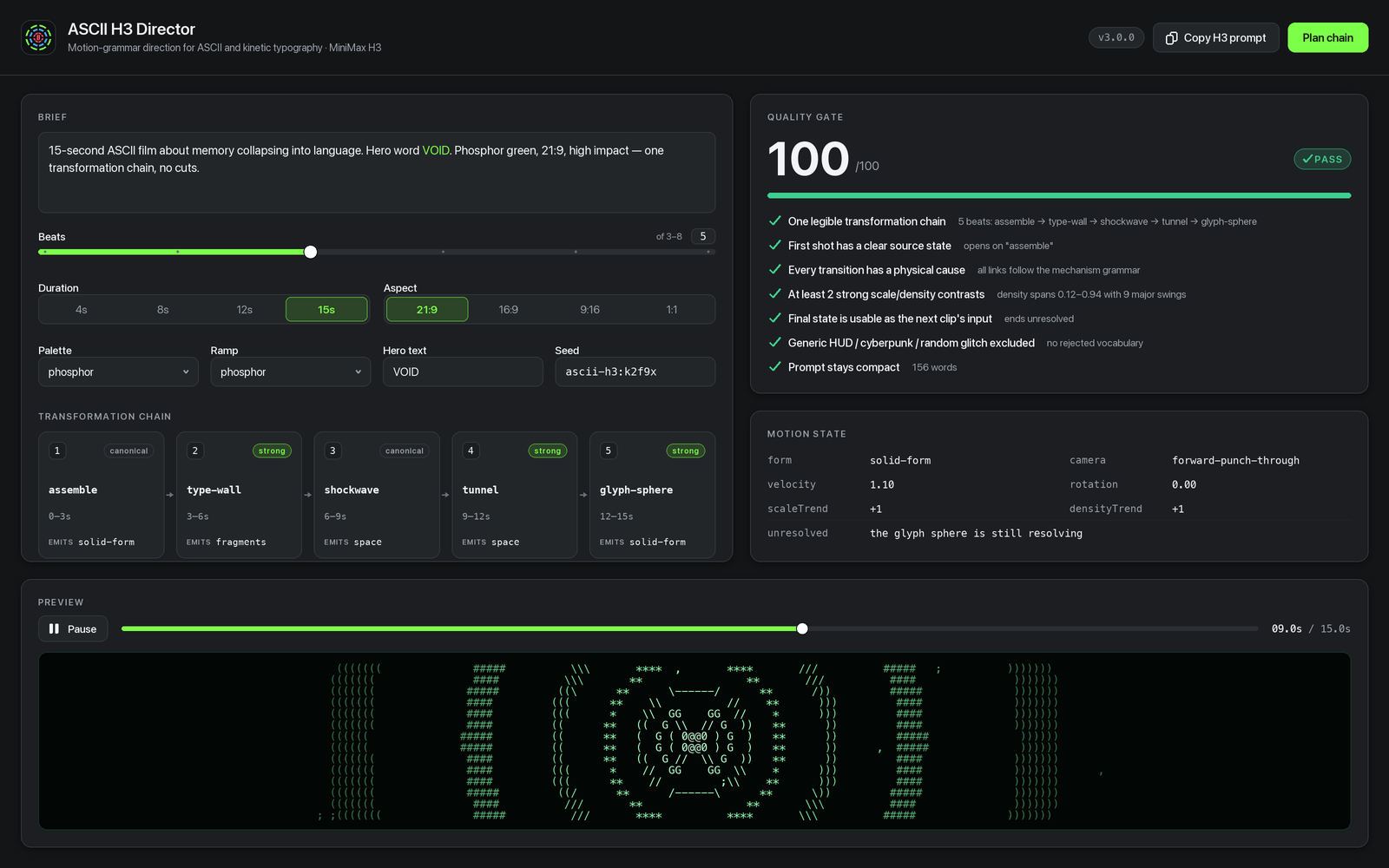
The Director Console puts all of this inside the DSH Web UI: the brief and flags on the left, the transformation chain with per-beat motion state in the middle, the gate score and a live preview on the right.
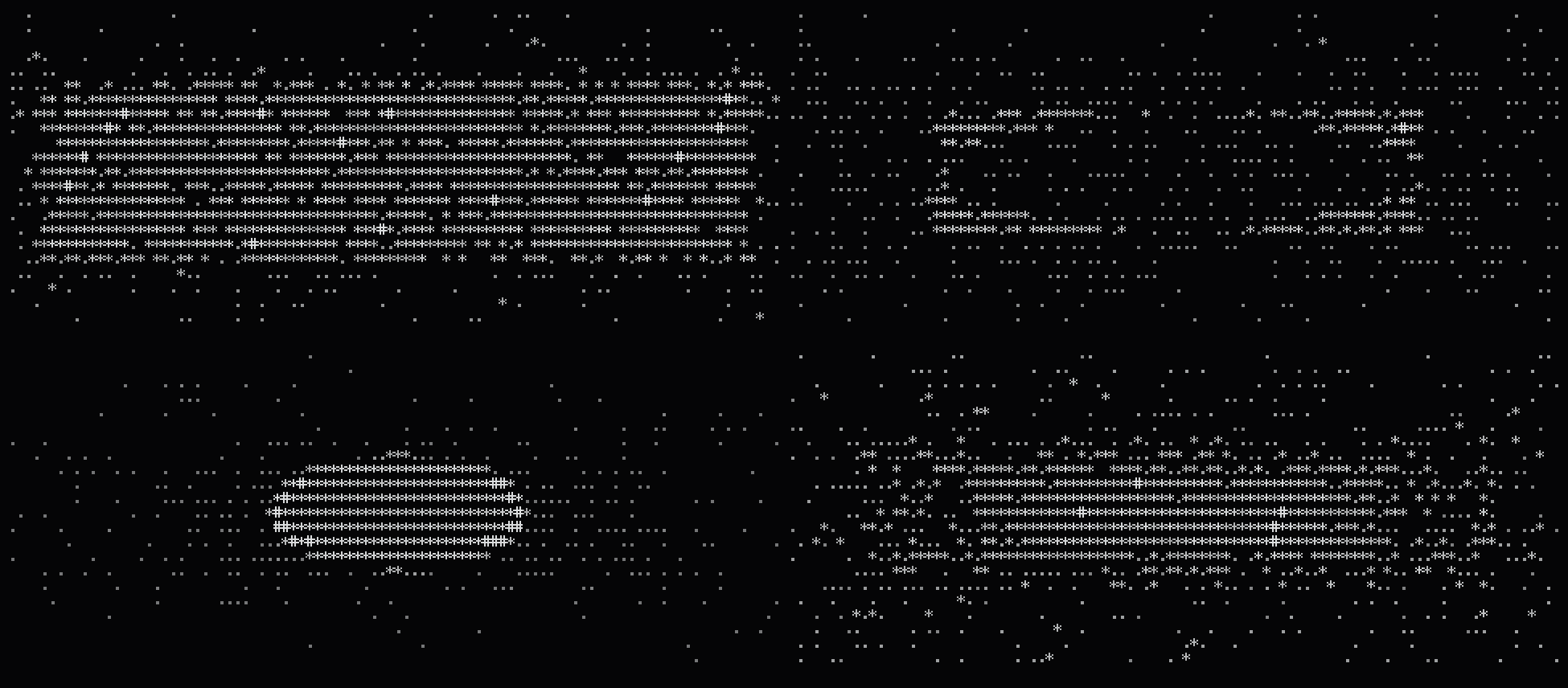
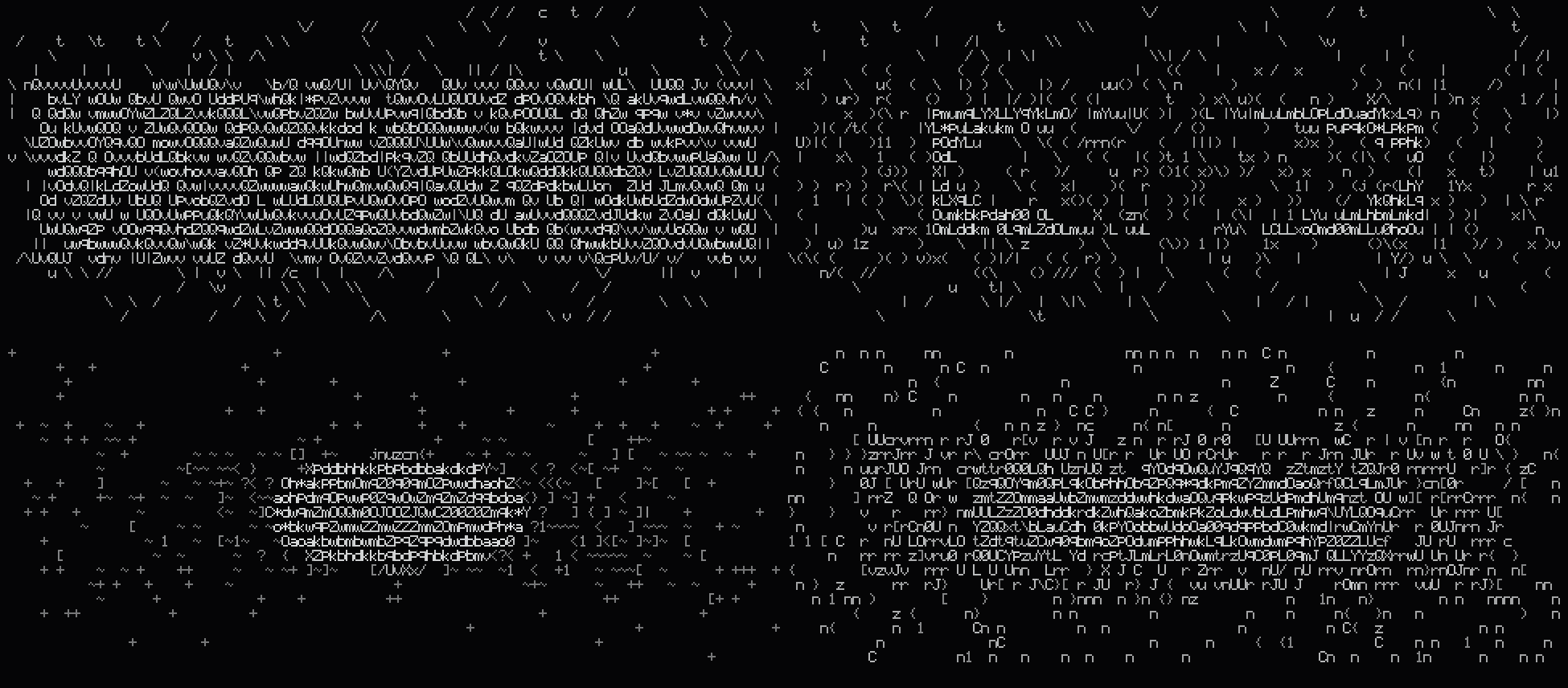
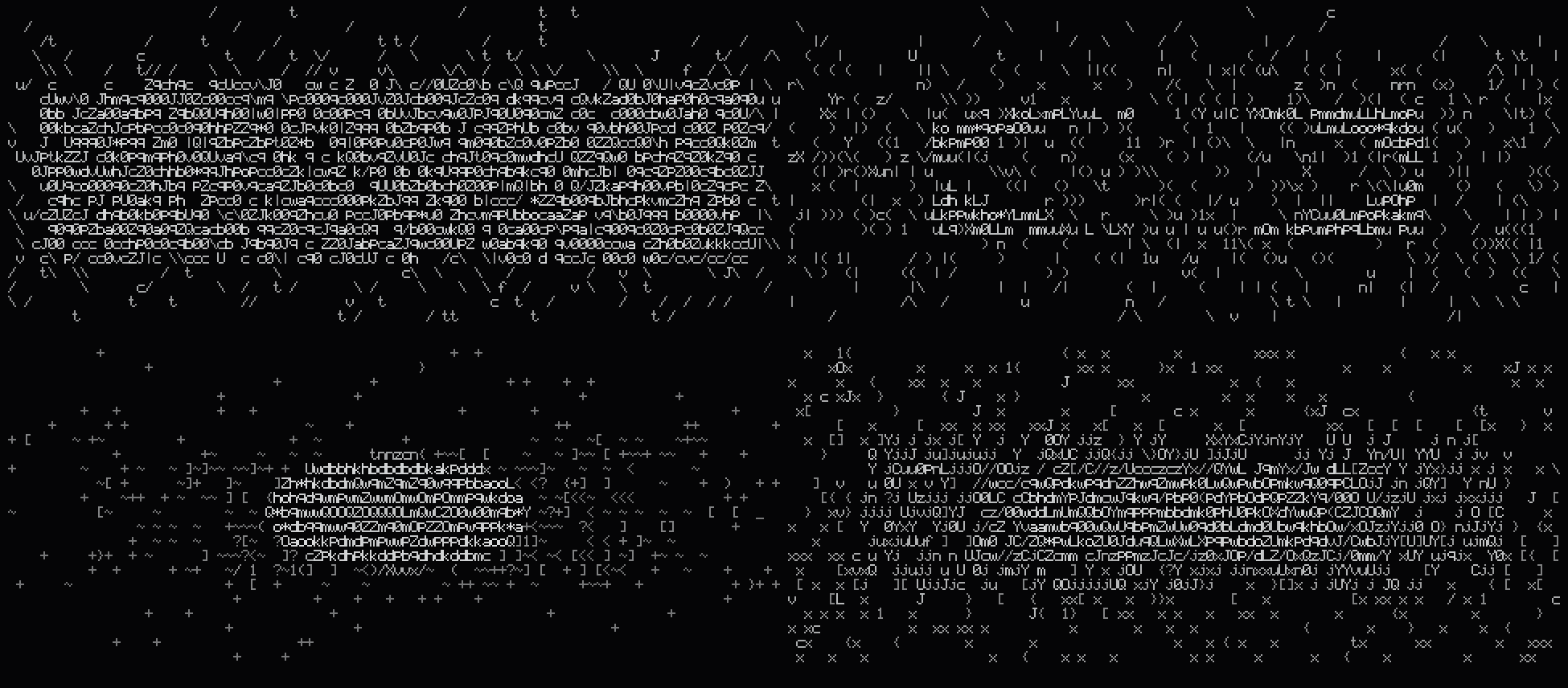
Contact sheets and preview frames from the deterministic engine:
ascii-h3-director/
├── src/
│   ├── cli.js             # command surface: 13 subcommands, arg parsing, doctor
│   ├── core.js            # seeded RNG, easing, value noise, 8 ramps, 5 palettes
│   ├── glyph-atlas.js     # hand-authored 5×9 bitmap font (ASCII 32–126, 95 glyphs)
│   ├── renderer.js        # Grid / Camera / primitives / planFilm / renderFilmFrame
│   ├── motion-grammar.js  # 21 mechanisms, FORM_SUCCESSORS, inherit / checkSeam
│   ├── director.js        # brief parsing, prompt composition, gate, reference, sequel
│   ├── raster.js          # Grid → text / SVG / RGB
│   └── png.js             # built-in PNG encoder (zlib only, no image library)
├── skill/                 # portable Agent Skill (SKILL.md + references + scripts)
├── docs/                  # trilingual documentation
├── assets/                # README images and contact sheets
└── test/ # determinism regression testsdoctor checks the major version explicitly)node_modules, and PNGs are written by the built-in encoderstrip, preview, svg and png never need itmmx-cli is optional: npm i -g mmx-cli, used only for paid generationmmx CLI for paid generation and downloadsAsciiEffect, the early reference for ASCII renderingMIT. Contributions: keep the three languages in sync and leave ascii-h3 doctor green.
CLASSIFICATION EVIDENCE
系统优先读取 GitHub Topics,再与站内分类词典和词根规则比对。当前命中: llm、deepseek-harness。
morluto
Reverse engineer anything with agents, from app behavior down to native binaries.

deepseek-ai
DeepSeek Harness: Everything is a Plugin.

nexu-io
The 1st Collaborative AI Design Agent Workspace. Local-first and open source. Create motion, prototypes, websites, apps, dashboards, presentations, images, and videos with your team and AI agents. Share work, exchange feedback, and iterate together in one workspace.