
模型与 MCP
待识别

rea
morluto
Reverse engineer anything with agents, from app behavior down to native binaries.
PROJECT TOPICS
INSTALL REFERENCE
dsh plugin --profile web add github:Jack7510/ggb-plugins-dsh
该命令指向仓库当前默认分支;尚无绑定当前 commit 的完整验证结果。
PROJECT README
Generated artifacts for the DSH package
ggb-plugins-dsh0.9.0. Source, issues and the MIT license: https://github.com/Jack7510/ggb-plugins (directorydsh/).
English | 简体中文
Turn a 2D math problem — given as text or an image — into an interactive GeoGebra file.
A host agent (Codex, DeepSeek Harness, or WorkBuddy) reads the problem and writes a native
Algebra/CAS program; this project runs it locally, verifies every stated condition, exports
the .ggb, reloads it, and delivers the file with a verification report and a screenshot.
Chinese and English are supported. The agent picks the working language from your preferences and context, keeps the original problem text, and never invents answers: it analyses conditions and builds the construction only.
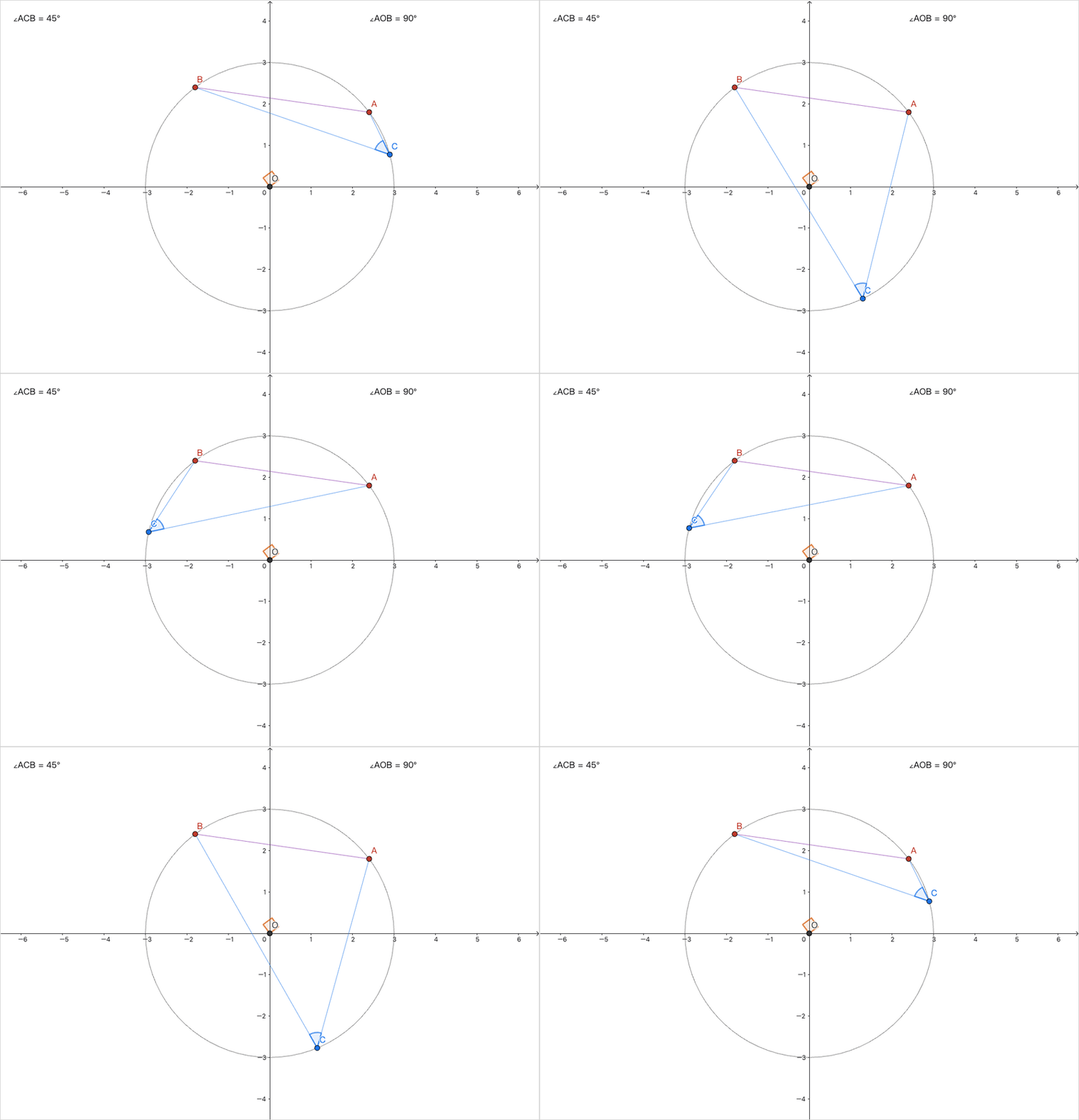
Dragging C keeps ∠ACB at half of ∠AOB while the construction, dependencies and checks stay live.
| Requirement | Why |
|---|---|
| Codex, DeepSeek Harness (DSH), or WorkBuddy | Interprets the problem and writes the native GeoGebra program |
| Node.js 22+ with pnpm 11 | Runs the local CLI and prepares dependencies |
curl and unzip |
Download and unpack the pinned GeoGebra runtime |
| Google Chrome or Microsoft Edge | Drives the applet headless during verification |
No extra model API key is required. Installation needs network access; GeoGebra and the browser
are not redistributed with the package. Building release packages additionally uses zip, tar,
and npm.
The current release is v0.9.0.
It ships the Codex ZIP and the DSH npm bundle; the WorkBuddy ZIP is built from the same source
with pnpm pack:workbuddy and is not published yet. The DSH package is listed on
dsh-plugin.org; the curated
5,539-entry awesome index is still pending. See the
0.9.0 release notes.
The DSH bundle is also on npm:
profile=desktop   # use web for the DSH Discover or Web host
dsh plugin --profile "$profile" add ggb-plugins-dsh@0.9.0
node ~/.dsh/profiles/$profile/node_modules/ggb-plugins-dsh/scripts/setup-plugin.mjs
Desktop users can paste one install message into the DSH chat instead of running the commands themselves.
To browse the plugin from DSH, enable Experimental plugins → Custom plugin markets, then add this source under Discover → Add index source:
https://cdn.jsdelivr.net/gh/Jack7510/ggb-plugins@main/docs/market/index.jsonThe clients install independently and share one execution and verification pipeline. Every
guide ends with runtime preparation (setup-plugin, which also reports the browser it will use)
and a readiness check (doctor).
Enable the plugin, start a new host session, and describe the problem. Images can be attached.
Use GeoGebra to construct triangle ABC, mark the midpoint M of AB, and connect CM. Colour the median red. Drag A to verify that the midpoint and median stay linked, save the file, and open the interactive preview.
Construction, reload, and every automated check run headless without intermediate windows. A condition that fails or cannot be verified blocks delivery instead of being skipped; failures keep their diagnostics so the next attempt can be corrected. If necessary conditions are missing or ambiguous the agent asks first, and when you do not give coordinates it explains the initial configuration it chose. The Skill defines what the agent may and may not decide on its own.
A successful run writes one delivery directory:
| File | Purpose |
|---|---|
<title>.ggb |
Native GeoGebra file named after the problem; open, inspect, and keep editing |
verification.json |
Per-condition results: construction, reload, and interaction samples |
preview.png |
Screenshot of the delivered configuration |
request.json, manifest.json |
Archived input and delivery manifest |
Reports state which checks ran and how far finite interaction samples reach; they never claim a
general proof. A standalone printable HTML report is produced with
node scripts/render-report.mjs --delivery <delivery> --output <file.html>.
The delivery directory sits at <outputDir>/<title>/delivery/. <title> comes from the problem
and also names the GGB file; a repeated title gets -2, -3 instead of overwriting an earlier
delivery.
The preview loads the same delivered GGB and supports applicable point dragging, parameter changes,
and zooming without writing back to the delivery. The preview process exits once the page loads; the
window keeps working, and running preview again reloads it. Use --headless for automated checks.
Hosts call this CLI for you, but other local tools can drive it too:
node <installed-plugin>/dist/src/cli.js doctor
node <installed-plugin>/dist/src/cli.js inspect --ggb /absolute/base.ggb
node <installed-plugin>/dist/src/cli.js build --request /absolute/request.json
node <installed-plugin>/dist/src/cli.js preview --delivery /absolute/delivery
To change an existing GGB, declare base in the request: edit colours, line styles, filling, or
visibility, add objects, or update independent values and coordinates. inspect lists objects,
current values, and the digest the request must declare. Deleting, renaming, and view changes are
not supported. Request authoring is documented in the
capability contract, in Chinese.
With the requirements above installed:
pnpm install --frozen-lockfile
pnpm setup:runtime
pnpm build
pnpm demo
pnpm demo constructs the bundled triangle example into output/. Verification and maintenance
commands, the working rules for coding agents, and the release process live in
AGENTS.md; do not duplicate them here.
src/ — CLI, execution, verification, and delivery pipeline.viewer/ — the local page that hosts the GeoGebra applet.skills/ — the shared Skill every host loads.codex/, dsh/, workbuddy/ — host-specific plugin assets, install guides, and acceptance records.examples/, tests/ — runnable inputs, the 10-type template index, and regression tests.scripts/ — dependency setup, packaging, report rendering, and coverage tools.docs/ — requirements and design,
change record,
the teacher case library,
and cross-client validation records. Historical records are indexed in the
stage archive.The project uses the MIT license; the source is github.com/Jack7510/ggb-plugins. GeoGebra has separate licensing and attribution requirements; see third-party notices.
CLASSIFICATION EVIDENCE
系统优先读取 GitHub Topics,再与站内分类词典和词根规则比对。当前命中: deepseek-harness。
morluto
Reverse engineer anything with agents, from app behavior down to native binaries.

deepseek-ai
DeepSeek Harness: Everything is a Plugin.

nexu-io
The 1st Collaborative AI Design Agent Workspace. Local-first and open source. Create motion, prototypes, websites, apps, dashboards, presentations, images, and videos with your team and AI agents. Share work, exchange feedback, and iterate together in one workspace.