

文件与数据
渠道适配

WeKnora
Tencent
Open-source LLM knowledge platform: turn raw documents into a queryable RAG, an autonomous reasoning agent, and a self-maintaining Wiki.
PROJECT TOPICS
INSTALL REFERENCE
dsh plugin --profile web add github:Harvey-Will/dsh-vision-analysis
该命令指向仓库当前默认分支;尚无绑定当前 commit 的完整验证结果。
PROJECT README





English · 中文
中文: DeepSeek Harness 图像理解插件 · 8 种分析模式(描述 / OCR / 图表取数 / UI 评审 / 目标检测 / 对比 / 代码生成 / 端点诊断)· 兼容任意 OpenAI / Anthropic 视觉端点 · 支持本地图片、链接与截图 · 密钥掩码、隐私优先。
Your text-only agent can finally "see" — with a free vision source built in: install the plugin, paste an image, ask. No API key, no model swap, no local-file dance.
chart-data and ocr return machine-readable JSON (rows, lines, …) your agent can consume directly.describe, ocr, ui-review, chart-data, object-detect, compare, code-gen, debug — each with a tuned instruction template.chat/completions or Anthropic messages wire formats. MiMo, Step, SiliconFlow, OpenRouter, Gemini (OpenAI-compat), GPT-4o, Claude, Qwen-VL, or a local Ollama / LM Studio / vLLM.http(s) URL, or base64 data: URL; up to 4 images per call with built-in comparison.debug report never reveals your API key (fully masked).Settings → 插件配置.@deepseek-ai/schemastery + @deepseek-ai/dsh-settings at runtime.Paste an image, ask a question, get a real answer — even on a text-only model. The image is routed to your configured vision endpoint and the analysis lands straight in the conversation:
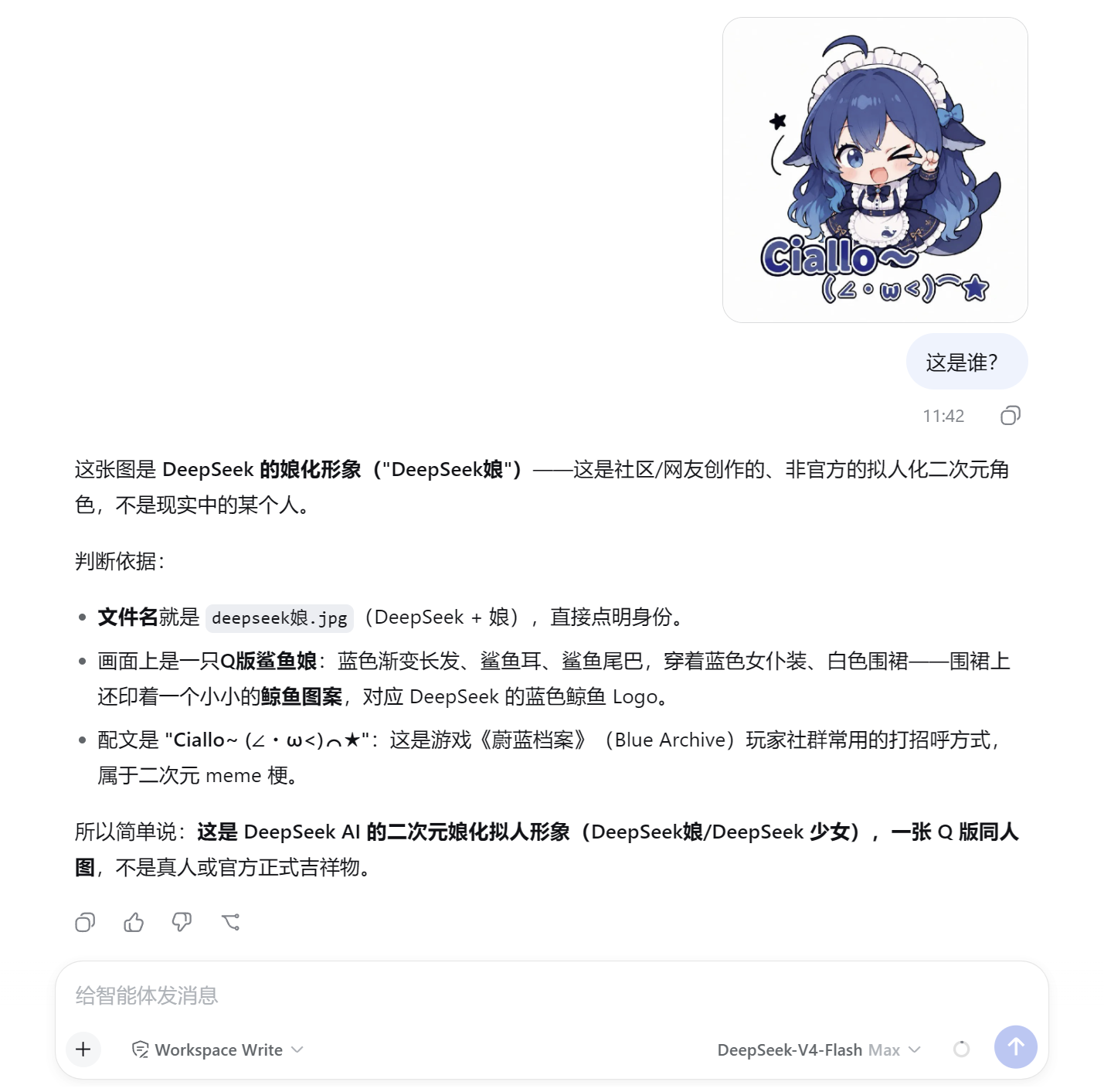
In the screenshot: a pasted image plus the question "这是谁?" — the vision endpoint identifies the DeepSeek fan-art character and walks through its reasoning, all without switching models or saving files locally.
Three everyday capabilities, each answered by a different free vision model automatically (when one is rate limited, the plugin fails over to the next).
1. OCR — pull text out of documents and screenshots
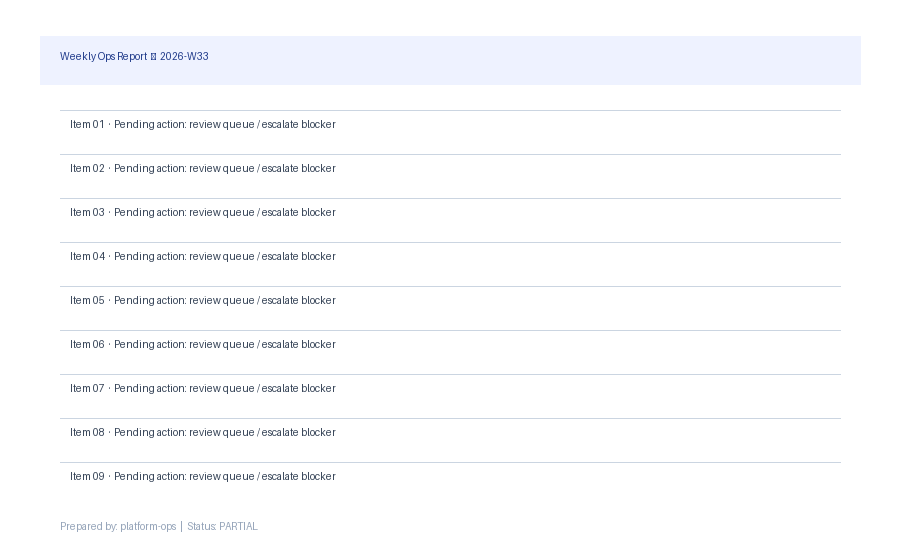
Weekly Ops Report — 2026-W33 Item 01 · Pending action: review queue / escalate blocker Item 02 · Pending action: review queue / escalate blocker … (all lines transcribed verbatim)
2. Charts → structured data your agent can use
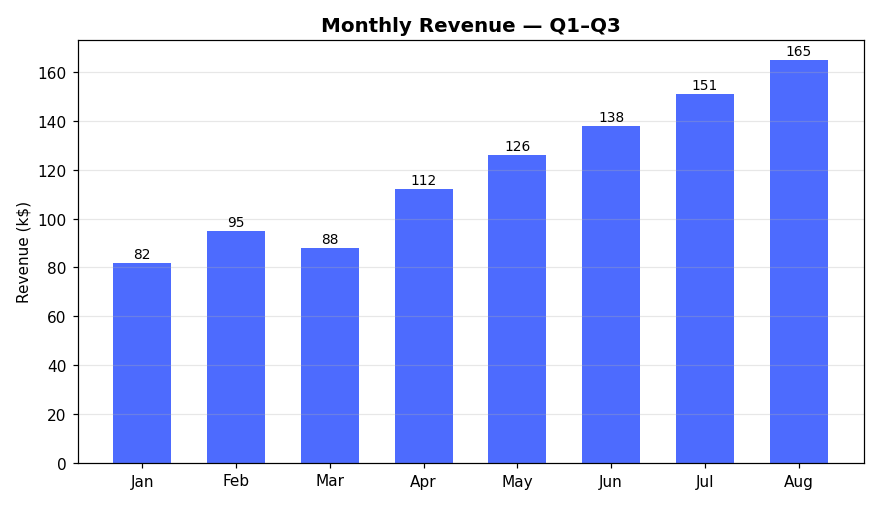
{ "title": "Monthly Revenue — Q1–Q3", "rows": [["Jan","82"],["Feb","95"],…] }3. UI review — a designer's eye on your interface
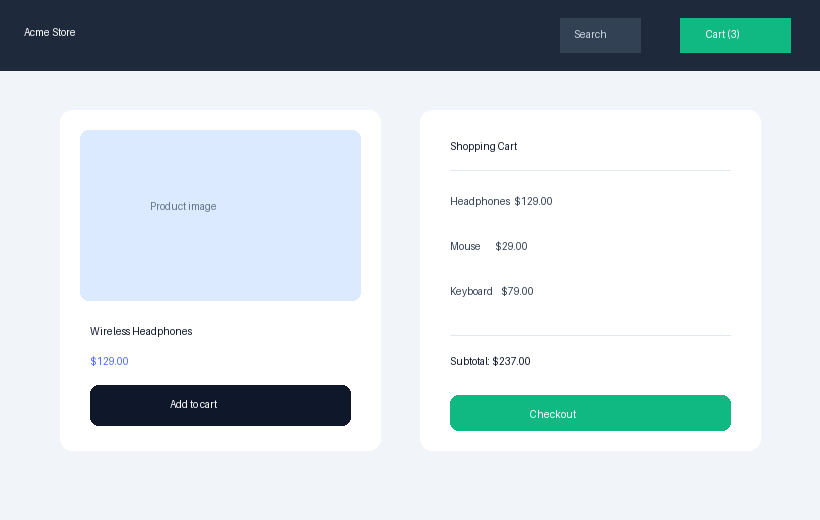
• Inconsistent button styling across "Add to cart" and "Checkout" (High) • Product name and price lack visual hierarchy (Medium) • Cart items unstructured; subtotal not visually distinct (Medium)
# From GitHub (no npm needed)
dsh plugin --profile web add github:Harvey-Will/dsh-vision-analysis

# Or one-click from the plugin market inside the Harness
Restart the web profile and ask your agent to analyze an image by path or URL:
"Use analyze_image to OCR
/tmp/screenshot.pngand tell me what it says."
That works with zero configuration: the plugin ships pointed at a free anonymous vision endpoint (OVHcloud AI Endpoints, Qwen2.5-VL-72B) — no API key required.
1. analyze_image tool (zero config) — the agent reads a local path, an http(s) URL, or a data URL. Works immediately after install.
2. Paste images straight into the conversation (image bridge) — requires two setup steps:
bridgeModels in the plugin config;image in that model's inputModalities in settings.yaml (this is what lets the Harness admit image prompts for it).# ① ~/.dsh/settings.yaml — under llm-deepseek.models, for each text-only model:
# inputModalities: [text, image]
# ② plugin config:
bridgeModels: [deepseek-v4-flash]config:
apiFormat: openai # or anthropic
baseURL: https://api.siliconflow.cn/v1
apiKey: your-key # leave empty for anonymous/local endpoints
model: Qwen/Qwen2.5-VL-72B-Instruct
fallbackModels: [Qwen3.5-9B] # same-endpoint alternates tried on HTTP 429| Mode | What it does | Built-in tokens / temp |
|---|---|---|
describe |
General understanding (default) | 4096 / 0.7 |
ocr |
Exact text extraction | 4096 / 0.0 |
ui-review |
Design review with score | 4096 / 0.5 |
chart-data |
Tables + trend from charts | 4096 / 0.0 |
object-detect |
Objects, people, activities | 4096 / 0.5 |
compare |
Two+ images side by side | 4096 / 0.5 |
code-gen |
HTML+CSS from a UI shot | 4096 / 0.3 |
debug |
Endpoint connectivity report | 4096 / 0.7 |
analyze_image(image?, images?, mode?, prompt?)image — absolute path, http(s) URL, or data:image/...;base64, URLimages — up to maxImages (default 2, max 4) for multi-image callsmode — one of the eight above; describe by defaultprompt — your precise instruction overrides the mode templateA targeted prompt beats a generic description:
prompt: "Extract the table as CSV">>prompt: "Describe this".
- id: vision-analysis
  name: dsh-vision-analysis
  config:
    apiFormat: openai          # openai | anthropic
    baseURL: https://api.siliconflow.cn/v1
    apiKey: ''                # empty → UNIVERSAL_VISION_API_KEY → local model
    model: Qwen/Qwen2.5-VL-72B-Instruct
    defaultMode: describe
    maxImages: 2              # 1-4
    maxBytes: 10485760        # per-image cap (10 MB)
    timeoutMs: 120000
    maxTokens: 4096
    temperature: 0.7
    modes:                    # per-mode overrides
      ocr:
        temperature: 0.0
All fields are editable live from Settings → 插件配置 (API key field is masked).
debug report only says configured / not configured — no prefix, no characters.cordis.yml — use UNIVERSAL_VISION_API_KEY or the masked secret field in Settings.http(s) image URLs you trust the endpoint to fetch.| Supported | |
|---|---|
| DeepSeek Harness | 0.1.0-rc.x – 0.2.0-rc.x (verified on 0.2.0-rc.1) |
| Node.js | ^22.19 \|\| >=24 |
| Vision wire formats | OpenAI chat/completions, Anthropic messages |
| Image formats | PNG, JPEG, GIF, WebP, BMP (local / URL / data URL) |
⚠️ Community plugin — not an official DeepSeek product. The Harness API is in developer preview and may break between versions.
Built for the DeepSeek Harness community · dsh-plugin topic · awesome-dsh-plugin
Found a bug or have an idea? Open an issue — PRs welcome.
CLASSIFICATION EVIDENCE
系统优先读取 GitHub Topics,再与站内分类词典和词根规则比对。当前命中: image-analysis、multimodal、ocr、vision。
Tencent
Open-source LLM knowledge platform: turn raw documents into a queryable RAG, an autonomous reasoning agent, and a self-maintaining Wiki.

liustack
The first vision plugin for DeepSeek Harness, and the vision bridge for every text-only coding agent. Paste an image, get structured JSON evidence (OCR, layout, semantics). | 全网最强 DeepSeek Harness 外挂视觉插件,为 DeepSeek、GLM 等纯文本模型外挂视觉能力,粘贴图片即得结构化 JSON 证据(OCR、版面、语义)。

dream-num
An open-source Office workspace where people and AI agents create, collaborate, and review together.