

部署运维
基础设施

sandbase-harness
sandbaseai
Local-first, self-hosted AI agent runtime and MCP bridge with sandboxed sessions, memory, credentials, audit/replay, and a local Console.
PROJECT TOPICS
INSTALL REFERENCE
dsh plugin --profile web add github:DjangoAILab/dsh-plugins
该命令指向仓库当前默认分支;尚无绑定当前 commit 的完整验证结果。
PROJECT README


Open-source extensions and field-tested engineering notes for DeepSeek Harness.
Connect to a dedicated Chrome profile over CDP, observe the page as a compact accessibility tree, address elements with stable refs, and fall back to screenshots only when structure is not enough. The plugin includes navigation, tabs, forms, dialogs, uploads, console/network inspection, masked cookies, persistent sessions, and an optional fail-closed approval gate.
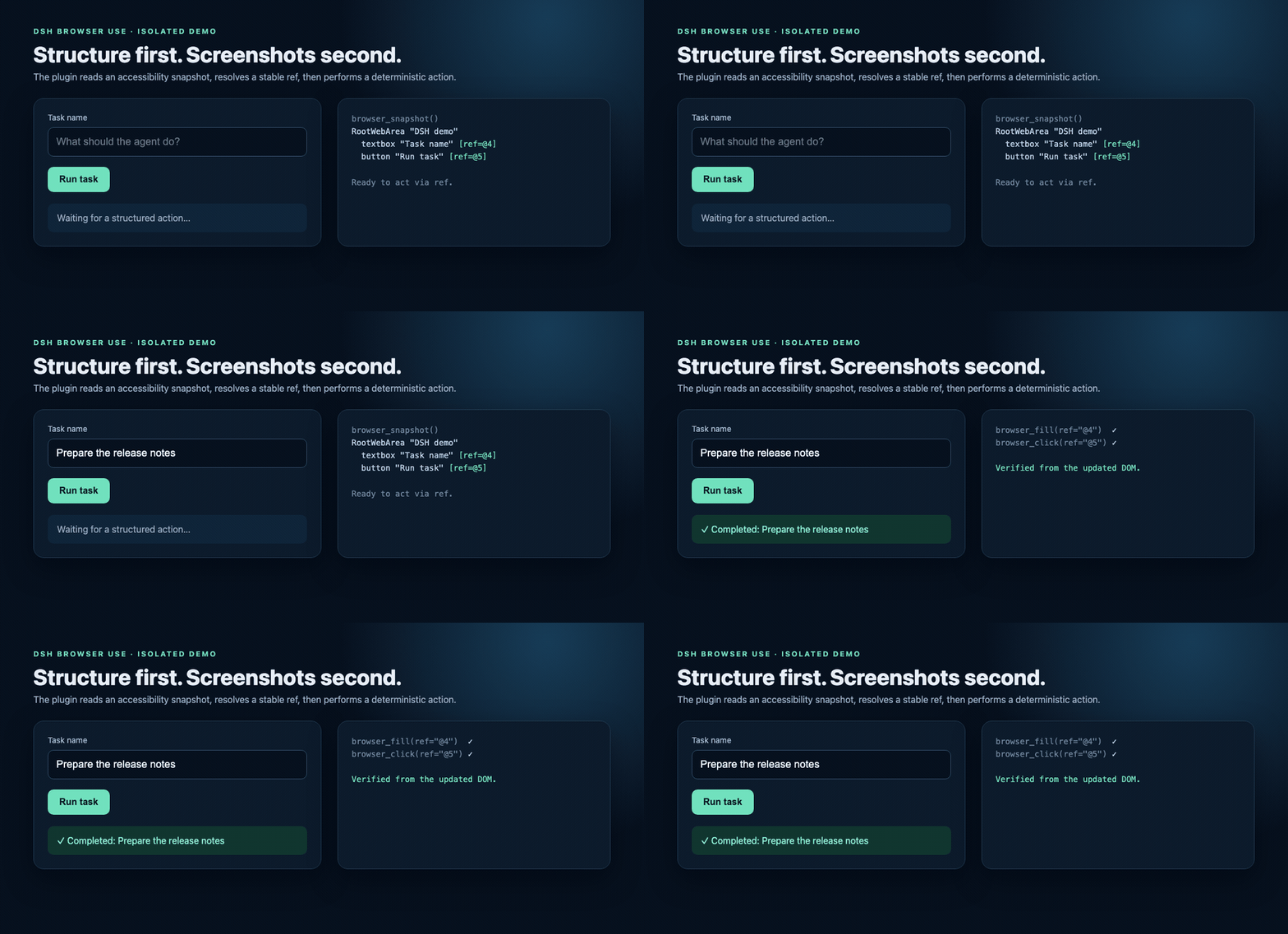
The demo above is real: the plugin's CDP client and action primitives drive an isolated local page. No account, browser history, or production endpoint is present. Open the Browser Use module →
Turn macOS applications into an element-level tool surface through AXUIElement: inspect apps and windows, snapshot
the accessibility tree, then click, type, press keys, use menus, scroll, launch, activate, or quit. A Swift helper
runs behind a bounded JSON-lines protocol; missing permissions and unsupported platforms fail closed.
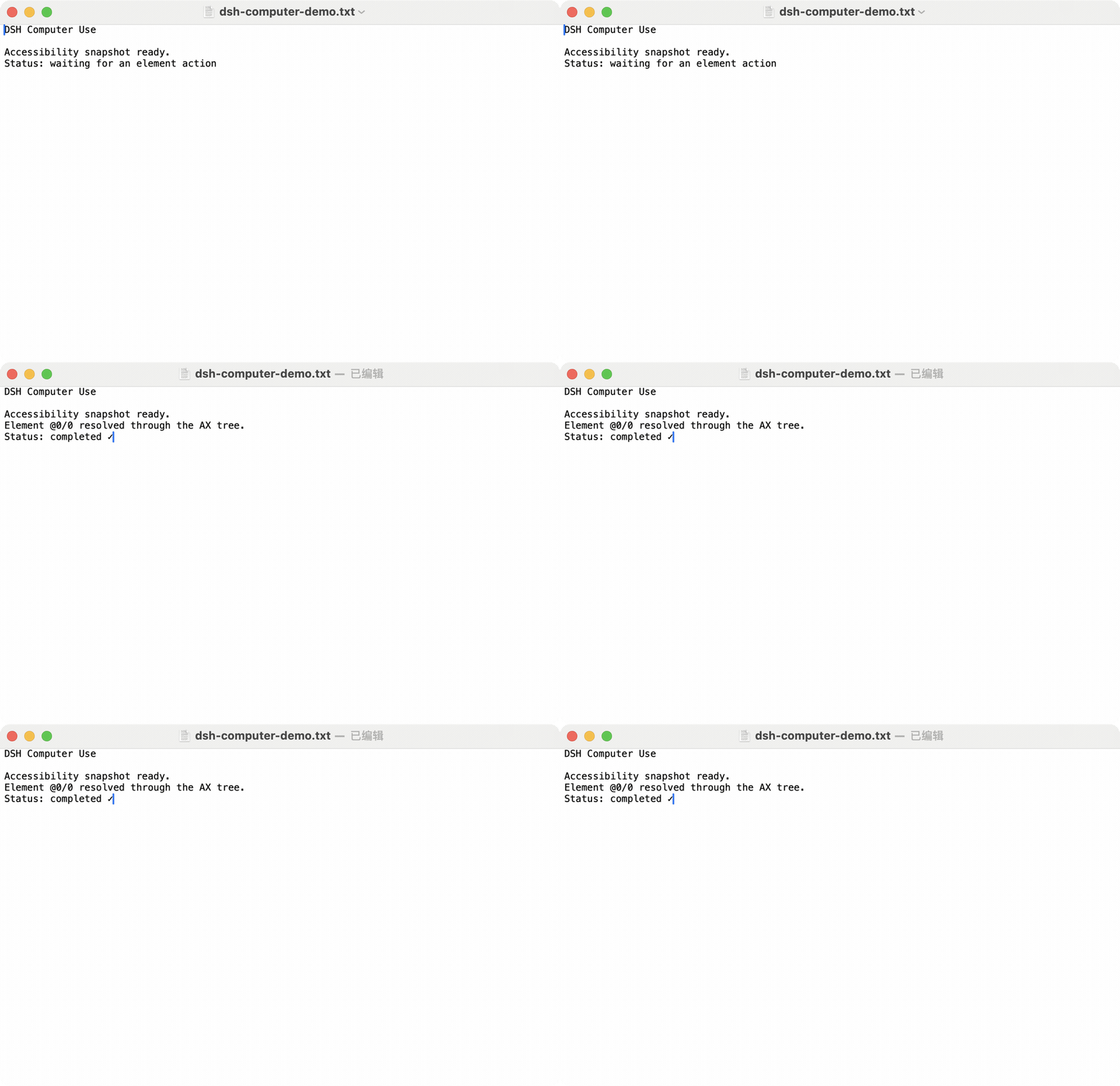
This is a window-only capture of the actual Swift AX driver resolving and editing an isolated TextEdit document. Open the Computer Use module →
Register external coding agents behind DSH's own subagent contract instead of inventing another scheduler. Foreground runs, background jobs, polling, cancellation, subprocess trees, output limits, provider aliases, and sandbox profiles remain explicit and deployment-controlled.
flowchart LR
    A[DSH tool call] --> B[Native subagent provider]
    B --> C[Codex CLI]
    B --> D[Claude Code CLI]
    B --> E[DSH Job]
    E --> F[job_output]
    E --> G[job_kill]
    G --> H[AbortSignal → process tree]
Open the External Agents module →
Register remote hosts behind memorable aliases, then let the agent list those aliases and execute one bounded command at a time. Hostnames, usernames, private keys, login passwords, and sudo passwords stay behind the plugin boundary. TOFU host-key pinning, per-command approval, a separate elevation approval, and redacted JSONL audit records make the control path inspectable.
flowchart LR
    O[Operator settings] --> R[Host aliases + credential refs]
    A[Agent] --> T[ssh_list_hosts / ssh_exec]
    T --> P[Policy + human approval]
    R --> P
    P --> F[TOFU host-key check]
    F --> S[SSH server]
    P --> L[Redacted audit log]
Sudo uses a two-step, fail-closed protocol: try passwordless execution first, and inject a stored sudo password only when the remote host proves it is required. The current release intentionally has no interactive PTY, upload, or download surface. Open the SSH Operations module →
git clone https://github.com/DjangoAILab/dsh-plugins.git
cd dsh-plugins
Choose one of the four modules above and follow its pinned install, verification, and rollback instructions. This repository intentionally treats its directory tree as the complete index:
ls plugins/manual
ls plugins/community
ls knowledge/foundations knowledge/domains knowledge/runbooks
plugins/manual/ contains source maintained in this repository.plugins/community/ contains integration recipes for upstream packages; third-party source is not vendored there.knowledge/ contains reusable DSH facts, domain research, and operational runbooks.Repository-original work is available under the MIT License. Vendored or adapted modules retain their upstream notices and licenses; consult the module-local license and acknowledgements.
CLASSIFICATION EVIDENCE
系统优先读取 GitHub Topics,再与站内分类词典和词根规则比对。当前命中: claude-code、devops、subagents。
sandbaseai
Local-first, self-hosted AI agent runtime and MCP bridge with sandboxed sessions, memory, credentials, audit/replay, and a local Console.

Han-1413141
DeepSeek Harness session cost meter plugin: session/daily cost, budget, history, OpenCode Go quota, official & custom-provider balance, Codex-like token heatmap, peak/off-peak pricing with pre-switch popup & system-notification alerts, official price sync, 90+ model pricing catalog, Coding Plan quota queries (7 vendors), bilingual zh/en UI

zh667
Relay-site attributed token usage for DeepSeek Harness — zero config, no credentials