Bifrost





Quickstart ·
Documentation ·
Ten-minute evaluation ·
Discord
Why Bifrost?
bifrost is Brokk's Rust-based static analysis toolbox for AI coding harnesses,
editors, and large repositories.
Bifrost gives every supported language a shared intermediate representation, so
the same structural query and navigation workflows work across a mixed-language
repository instead of stopping at language boundaries.
- One multi-language IR. Parse unbuilt or partially broken workspaces and
normalize their source structure for cross-language analysis.
- A real query language. Use JSON CodeQuery or the Rune Query Language
(RQL) to find language-neutral code shapes and traverse indexed declarations,
references, calls, imports, and type relationships.
- Built for agents and editors. Expose structured MCP tools to coding
agents, LSP features to editors, and the same analyzer through the CLI,
Python, and Rust.
- Designed for active repositories. Snapshot isolation, incremental updates,
content-based caching, and git/worktree awareness keep analysis responsive as
a repository changes.
See Choose Bifrost for the
right interface for your workflow, and the Language and Analysis
Capabilities matrix for
language-by-language support, precision tiers, and current analysis boundaries.
Run Your First Query
Install the released CLI, clone the small verified evaluation fixture, and run
its saved RQL query:
curl -fsSL https://raw.githubusercontent.com/BrokkAi/bifrost/refs/heads/master/install.sh | bash
git clone --depth 1 https://github.com/BrokkAi/bifrost.git
cd bifrost/docs/fixtures/ten-minute-evaluation
bifrost --root . --query-file queries/find-audit.rql
Users with uv or
pipx can instead run uv tool install brokk-bifrost or
pipx install brokk-bifrost; both install the same native bifrost command
from a platform wheel in an isolated environment. uvx brokk-bifrost --version
runs it without a persistent install.
Node users can run npm install -g @brokkai/bifrost or use
npx -y @brokkai/bifrost --version. The npm package installs the same released
native command for the current platform.
The installer downloads the checksum-verified release binary into ~/.local/bin
on macOS (Apple Silicon and Intel), glibc 2.28+ Linux (x86-64 and ARM64), WSL,
and Android under Termux. Homebrew users on macOS and glibc Linux can run
brew install brokkai/tap/bifrost instead. On Windows, use the published
archive or build from source. Musl distributions such as Alpine have no
supported prebuilt release; users can attempt a source build with
cargo install brokk-bifrost --locked. See
Install Bifrost for the full platform
table.
The result identifies the normalized Python call and its exact source location:
{
  "isError": false,
  "structuredContent": {
    "results": [
      {
        "enclosing_symbol": "src.app.handle",
        "end_line": 5,
        "kind": "call",
        "language": "python",
        "path": "src/app.py",
        "result_type": "structural_match",
        "start_line": 5,
        "text": "audit(value)"
      }
    ],
    "truncated": false
  }
}
Continue with the ten-minute
evaluation to run the same
query through the CLI, an MCP-connected coding agent, and VS Code.
See Bifrost in Action
Turn Source into a Query in VS Code
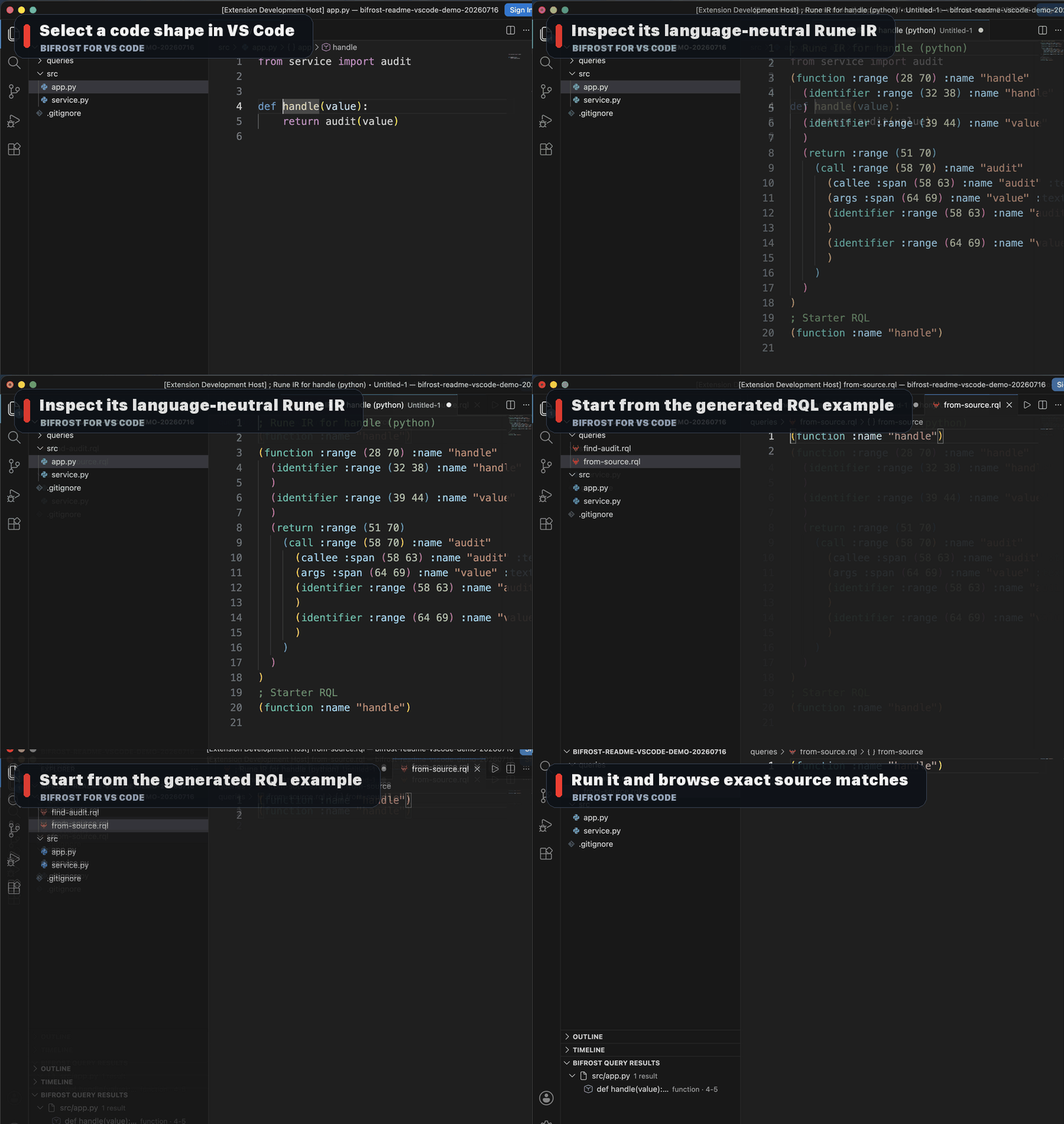
Select a source construct and run Bifrost: Show Rune IR to inspect its
language-neutral .rune form and get a conservative starter RQL query. Run that
query from the editor, browse typed results grouped by file, and jump to the
exact source range. The extension also provides definitions, references, hover,
rename, symbols, hierarchy, diagnostics, completion, and other LSP features.
Use the Same Analyzer from the CLI
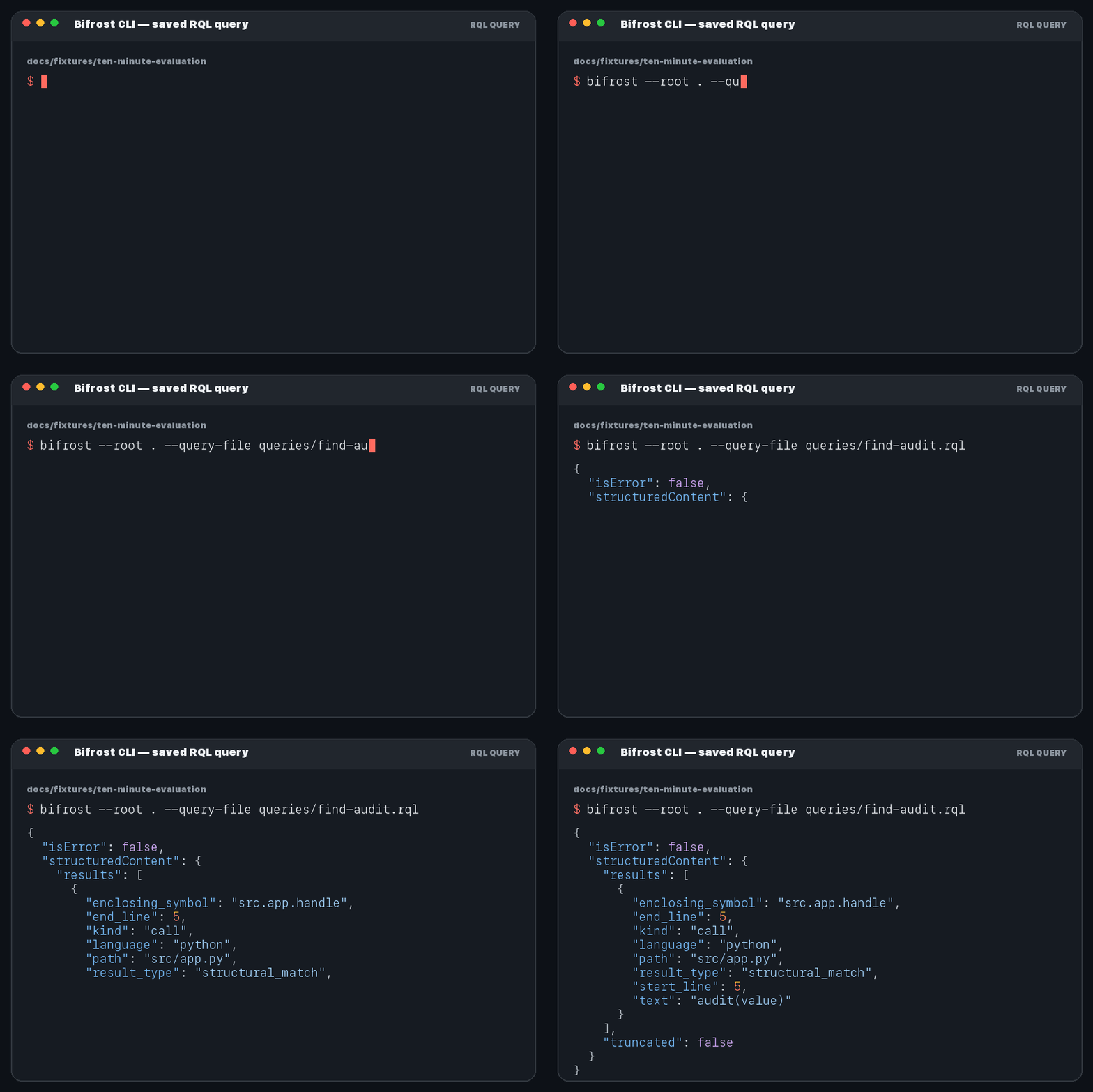
Run saved RQL or JSON queries directly, or call the same named tools exposed over
MCP for shell scripts and reproducible analysis workflows.
Language Coverage
Bifrost includes analyzers for C, C++, C#, Go, Java, JavaScript, Kotlin, PHP,
Python, Ruby, Rust, Scala, and TypeScript. See the capability
matrix for the supported
analysis and precision boundaries in each language.
Documentation
The public documentation site lives in docs/ and is published at
bifrost.brokk.ai.
Useful starting points:
Run the docs site locally with:
cd docs
npm install
npm run dev
GitHub Pages publication is handled by .github/workflows/docs.yml. Release tag
builds publish both the latest docs site and a versioned snapshot under
versions/<tag>/.
Repository Layout
The repository is organized around the public product surfaces:
- Core analysis:
crates/ contains the Rust workspace crates;
src/ provides the top-level facade and CLI; schemas/
holds shared data contracts.
- Integrations and distribution:
editors/zed/ contains the
Zed extension; the VS Code extension is maintained in
BrokkAi/bifrost-lsp.
plugins/ contains coding-agent plugins; npm/,
packaging/, and
bifrost_searchtools/ expose or package the analyzer.
- Documentation and examples:
docs/ is the documentation site;
examples/ contains runnable examples.
- Open analysis content:
BrokkAi/bifrost-packs is the home
for open semantic packs and policy rules, including contributions, generation,
and independently versioned releases. The v0.13 engine ships without product
rules; LSP/MCP and other hosts acquire compatible releases through the verified
cache flow. Parser assets and separate semantic-model packs remain engine
inputs. The engine retains pack tooling and regression fixtures; .bifrost/
contains project-level analysis defaults.
- Development support:
benchmark/ covers reproducible
measurements; scripts/ and tools/ hold maintenance
and release helpers. Root manifests plus .github/, .cargo/, and .config/
define builds, checks, and automation.
License and Commercial Use
Bifrost's public open core is licensed under Apache-2.0 and may be used in
research, internal systems, hosted services, and commercial products. Read the
License page for the project
terms and Third-Party Notices
for the additional terms that apply to official binaries and semantic packs.
Contributing
Project contributors


The public repository is projected from Bifrost's open-core source, so its
GitHub contributor graph does not reflect everyone who helped build the project.
For local development, test commands, repository-local Python workflow, and
release tagging, see CONTRIBUTING.md.
Contribute open semantic models and policies to
Bifrost-packs. Engine, parser,
catalog, and policy-evaluation improvements belong here.